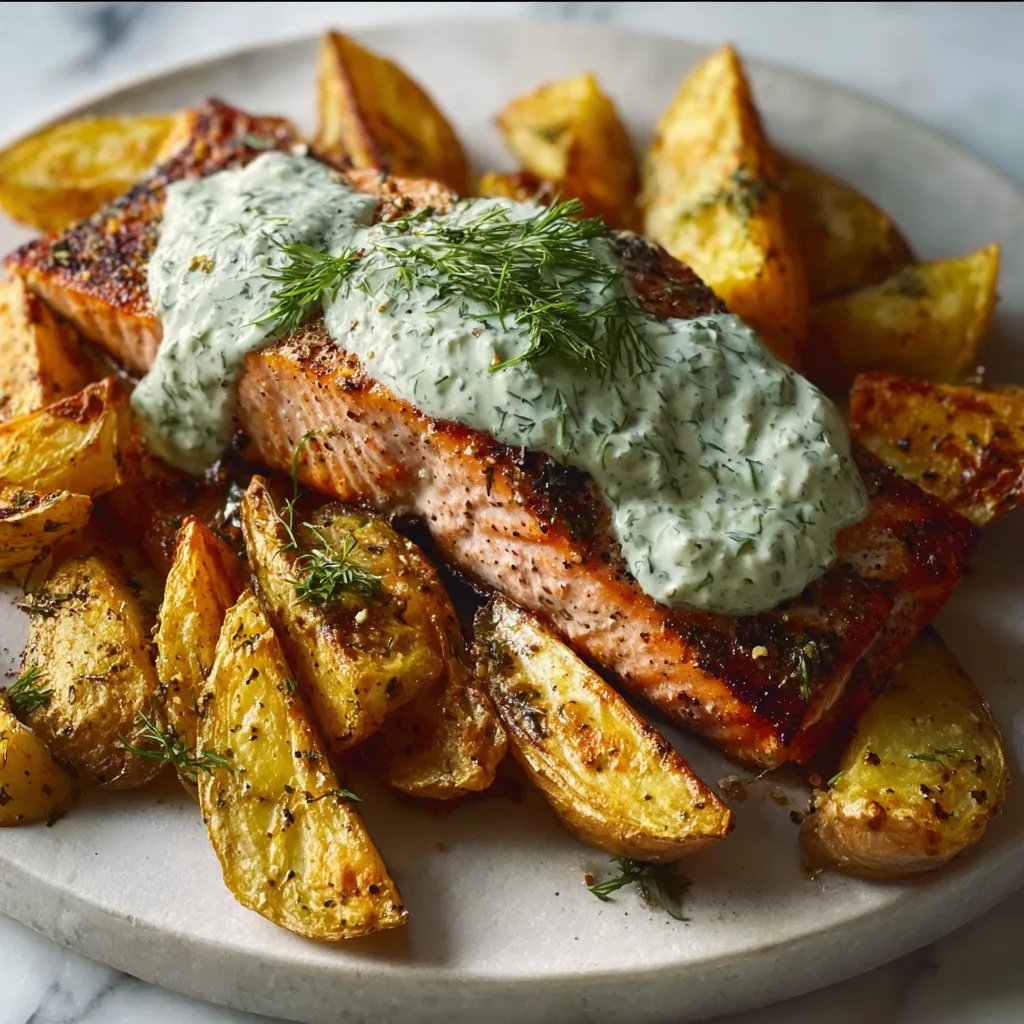
Dill Salmon with Potato Wedges and Creamy Pickle Dill Sauce 🐟
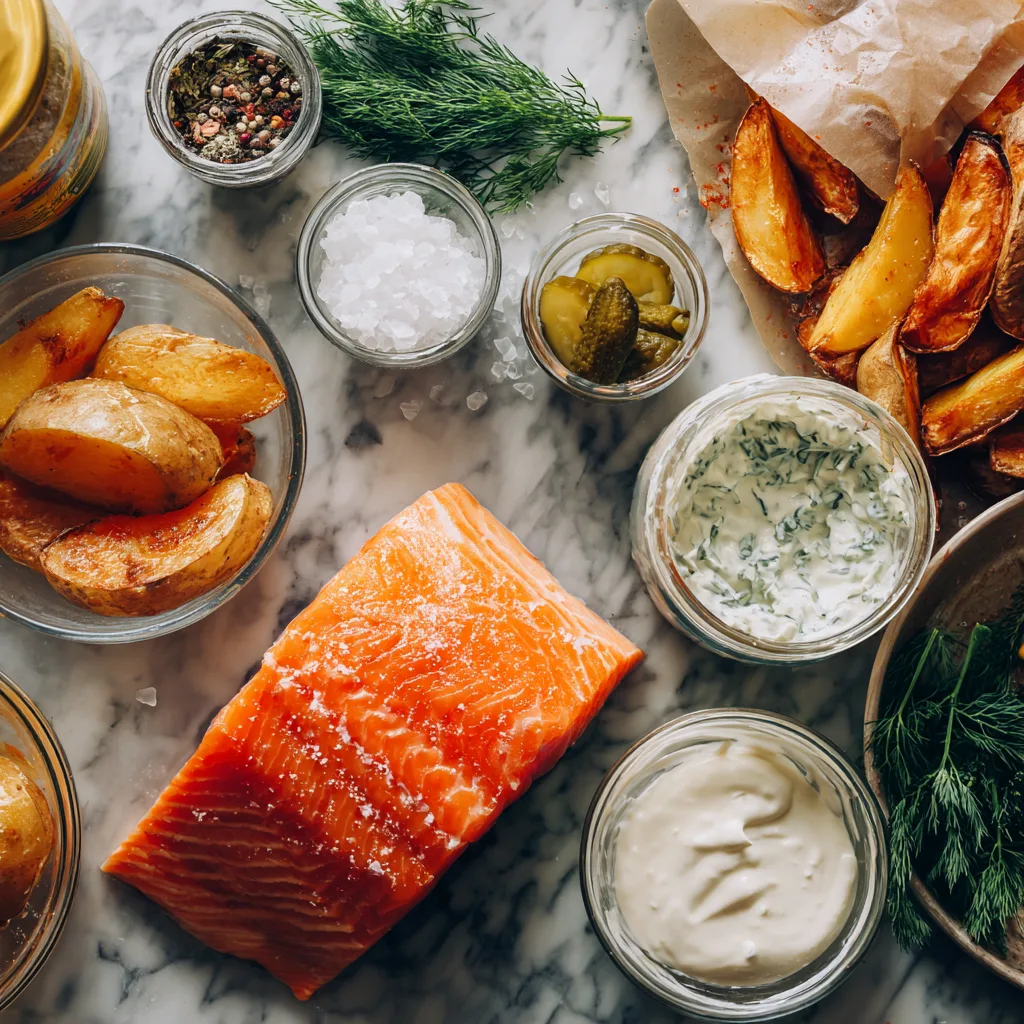
Nothing quite captures the essence of comfort food like a perfectly prepared salmon dish paired with crispy potato wedges and a tangy, creamy sauce. This dill salmon with potato wedges and creamy pickle dill sauce brings together the best of hearty home cooking with sophisticated flavors that will impress your family and guests alike. The combination of flaky, tender salmon, golden crispy potato wedges, and a rich, herb-infused sauce creates a memorable dining experience that’s both satisfying and nutritious.
This recipe draws inspiration from Scandinavian cuisine, where salmon and dill have been culinary partners for centuries. The addition of a creamy pickle dill sauce adds a modern twist to this classic pairing, creating a dish that’s both familiar and exciting. Whether you’re preparing a weeknight dinner for the family or hosting a special dinner party, this salmon recipe delivers restaurant-quality results with simple, accessible ingredients.
The Art of Perfect Salmon Preparation
Achieving perfectly cooked salmon is one of the fundamental skills every home cook should master. The key to success lies in understanding the fish’s delicate nature and respecting its cooking requirements. Salmon should be cooked to an internal temperature of 145°F (63°C), but it’s equally important to consider the residual cooking that occurs after removing it from heat. This means you can actually remove the salmon from the oven when it reaches 140°F, allowing the residual heat to finish the cooking process.
When selecting salmon for this recipe, look for fillets that are firm to the touch, have a bright orange-pink color, and smell fresh like the ocean rather than fishy. Wild-caught salmon typically offers superior flavor and texture compared to farm-raised varieties, though both will work beautifully in this recipe. The skin-on fillets are preferred as they help hold the fish together during cooking and provide additional flavor.
The preparation process begins with bringing the salmon to room temperature about 15-20 minutes before cooking. This ensures even cooking throughout the fillet and prevents the exterior from overcooking while the center remains cold. Pat the salmon dry with paper towels and season generously with salt and pepper, allowing the seasoning to penetrate the fish for at least 10 minutes before cooking.
Creating Irresistibly Crispy Potato Wedges
The secret to achieving perfectly crispy potato wedges lies in proper preparation and cooking technique. Start by selecting the right type of potato – russets are ideal for their high starch content, which creates a fluffy interior and crispy exterior. Yukon Gold potatoes also work well and offer a creamier texture with excellent flavor.
Cut the potatoes into uniform wedges to ensure even cooking. Each potato should yield 6-8 wedges depending on size. The key is maintaining consistent thickness so all pieces cook at the same rate. Soaking the cut potatoes in cold water for 30 minutes helps remove excess starch, resulting in crispier wedges. After soaking, pat them completely dry with paper towels – any remaining moisture will create steam during cooking and prevent proper crisping.
Toss the dried potato wedges with olive oil, salt, pepper, and your choice of seasonings. Garlic powder, paprika, and dried herbs complement the salmon beautifully. Arrange the wedges in a single layer on a baking sheet, ensuring they don’t overlap. Overcrowding leads to steaming rather than roasting, resulting in soggy potatoes instead of the desired crispy exterior.
Mastering the Creamy Pickle Dill Sauce
The star of this dish is undoubtedly the creamy pickle dill sauce, which brings together tangy pickles, fresh dill, and rich dairy to create a condiment that elevates the entire meal. This sauce draws inspiration from traditional Scandinavian dill sauces but adds the bright acidity of pickles for extra complexity and flavor balance.
The foundation of great dill sauce starts with quality ingredients. Use full-fat sour cream or Greek yogurt for the creamiest texture and richest flavor. Fresh dill is absolutely essential – dried dill simply cannot provide the bright, herbaceous flavor that makes this sauce special. When selecting dill, look for bright green fronds with no yellowing or wilting.
The pickles should be high-quality dill pickles with a good balance of sourness and flavor. Avoid sweet pickles for this recipe as they will throw off the sauce’s flavor profile. Finely mincing the pickles ensures they distribute evenly throughout the sauce while providing pleasant textural contrast in every bite.
Bringing the Components Together
The magic of this dish happens when all components come together on the plate. Timing is crucial to ensure everything is served at its optimal temperature and texture. Start by preheating your oven and getting the potato wedges cooking first, as they require the longest cooking time. While the potatoes roast, prepare your salmon and make the creamy dill sauce.
The salmon should go into the oven about 15-20 minutes after the potatoes start cooking, depending on the thickness of your fillets. This timing allows both components to finish cooking around the same time. The dill sauce can be prepared while everything cooks and should be stored in the refrigerator until serving to maintain its fresh, cool contrast to the warm fish and potatoes.
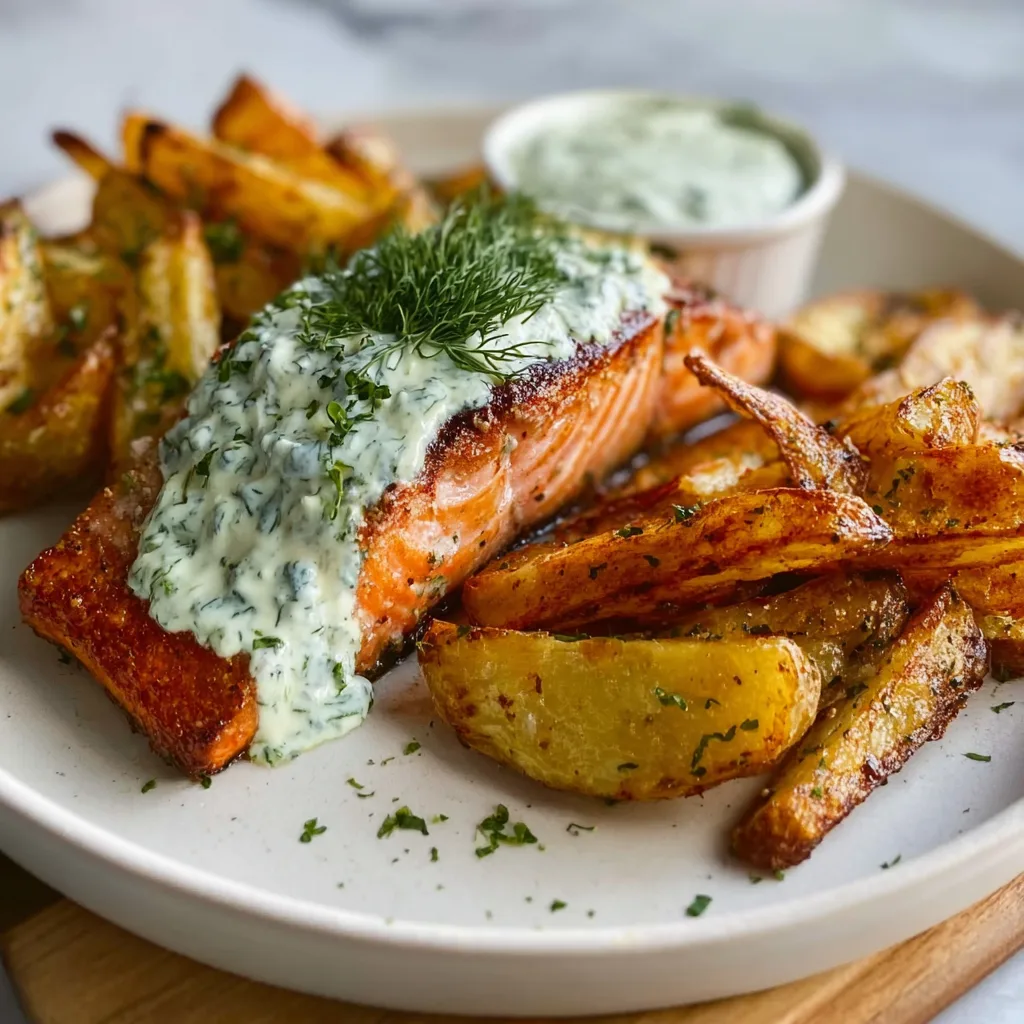
When plating, arrange the crispy potato wedges alongside the salmon fillet and generously spoon the creamy pickle dill sauce over the fish. The sauce can also be served on the side for those who prefer to control the amount. Garnish with additional fresh dill fronds for visual appeal and extra herb flavor.
Nutritional Benefits and Dietary Considerations
This dill salmon recipe offers exceptional nutritional value while remaining indulgent and satisfying. Salmon is renowned for its high omega-3 fatty acid content, which supports heart health, brain function, and reduces inflammation throughout the body. A single serving provides significant amounts of high-quality protein, vitamin D, vitamin B12, and selenium.
The potato wedges contribute important nutrients including potassium, vitamin C, and fiber when the skins are left on. While potatoes often get overlooked as a nutritious vegetable, they provide sustained energy through complex carbohydrates and contain more potassium than bananas.
The creamy dill sauce, while indulgent, can be made lighter by substituting Greek yogurt for sour cream or using a combination of both. This modification increases the protein content while reducing calories and fat. The fresh dill provides vitamin K and antioxidants, while the pickles contribute probiotics that support digestive health.
Perfect Pairings and Serving Suggestions
This salmon dish pairs beautifully with a variety of side dishes and beverages. Light, crisp white wines such as Sauvignon Blanc or Pinot Grigio complement the fish without overwhelming its delicate flavor. For those who prefer red wine, a light Pinot Noir works wonderfully with salmon.
Beer enthusiasts should consider wheat beers or light lagers that won’t compete with the dill sauce’s flavors. The pickle element in the sauce makes this dish particularly compatible with German-style wheat beers or pilsners.
For additional sides, consider serving steamed asparagus, roasted Brussels sprouts, or a simple mixed green salad with lemon vinaigrette. These lighter accompaniments balance the richness of the creamy sauce while adding color and nutritional variety to the plate.
Storage and Leftover Magic
Properly stored leftovers from this meal can be transformed into delicious new dishes. Cooked salmon keeps well in the refrigerator for up to three days and can be flaked into salads, pasta dishes, or grain bowls. The creamy dill sauce makes an excellent spread for sandwiches or a dip for vegetables.
Leftover potato wedges can be reheated in the oven to restore some crispiness, though they’re also delicious cold in potato salad or hash. The key to reheating any component is using gentle heat to prevent overcooking the salmon or making the potatoes soggy.
When storing leftovers, keep each component separate to maintain optimal texture and flavor. The salmon should be wrapped tightly, the potatoes stored in an airtight container, and the sauce refrigerated in a sealed jar or container.
Seasonal Variations and Creative Adaptations
While this recipe is delicious as written, it adapts beautifully to seasonal ingredients and personal preferences. In summer, add fresh cucumber to the dill sauce for extra crunch and freshness. Fall variations might include roasted root vegetables instead of potato wedges, while winter adaptations could incorporate hearty herbs like rosemary or thyme.
For those following specific dietary requirements, this recipe is naturally gluten-free and can be made dairy-free by substituting coconut cream or cashew cream for the sour cream in the sauce. The dish is also keto-friendly when served with additional vegetables instead of potato wedges.
Creative cooks might experiment with different pickle varieties in the sauce – bread and butter pickles create a sweeter profile, while spicy dill pickles add heat and complexity. Capers can be substituted for pickles for a more Mediterranean flavor profile.
Dill Salmon with Potato Wedges and Creamy Pickle Dill Sauce
Ingredients
Equipment
Method
- Preheat oven to 425°F (220°C) and line two baking sheets with parchment paper.
- Cut potatoes into uniform wedges and soak in cold water for 30 minutes.
- Pat potato wedges dry and toss with olive oil, salt, pepper, paprika, and garlic powder.
- Arrange potato wedges on one baking sheet and roast for 35-40 minutes until golden and crispy.
- Season salmon fillets with salt and pepper, let stand at room temperature for 15 minutes.
- Place salmon on second baking sheet and bake for 12-15 minutes until internal temperature reaches 145°F.
- Meanwhile, combine sour cream, chopped pickles, fresh dill, minced garlic, and lemon juice in a bowl.
- Season the dill sauce with salt and pepper to taste, refrigerate until serving.
- Serve salmon with crispy potato wedges and generous dollops of creamy pickle dill sauce.
- Garnish with additional fresh dill and serve immediately while hot.
Notes
Conclusion: A Recipe Worth Mastering
This dill salmon with potato wedges and creamy pickle dill sauce represents the perfect balance of comfort and sophistication. The recipe combines simple techniques with quality ingredients to create a dish that’s both approachable for weeknight cooking and impressive enough for entertaining. The creamy, tangy sauce elevates the entire meal, transforming basic salmon and potatoes into something truly special.
Whether you’re new to cooking salmon or looking to expand your repertoire of fish dishes, this recipe provides a reliable foundation for delicious, nutritious meals. The combination of flavors and textures creates a satisfying dining experience that will have everyone asking for seconds and the recipe itself.
Ingredients:
- 4 salmon fillets (6 oz each), skin-on
- 4 large russet potatoes, cut into wedges
- 1 cup sour cream
- 1/2 cup finely chopped dill pickles
- 1/4 cup fresh dill, minced
- 2 tablespoons oliv