Homemade Baguette Recipe
Crusty, Airy, and Irresistibly Fresh — The Classic French Bread Made Simple
Few aromas can compare to the heavenly scent of freshly baked bread wafting from your kitchen. And among all the breads of the world, the French baguette stands in a class of its own — crisp on the outside, tender and airy on the inside, and perfect with just about anything.
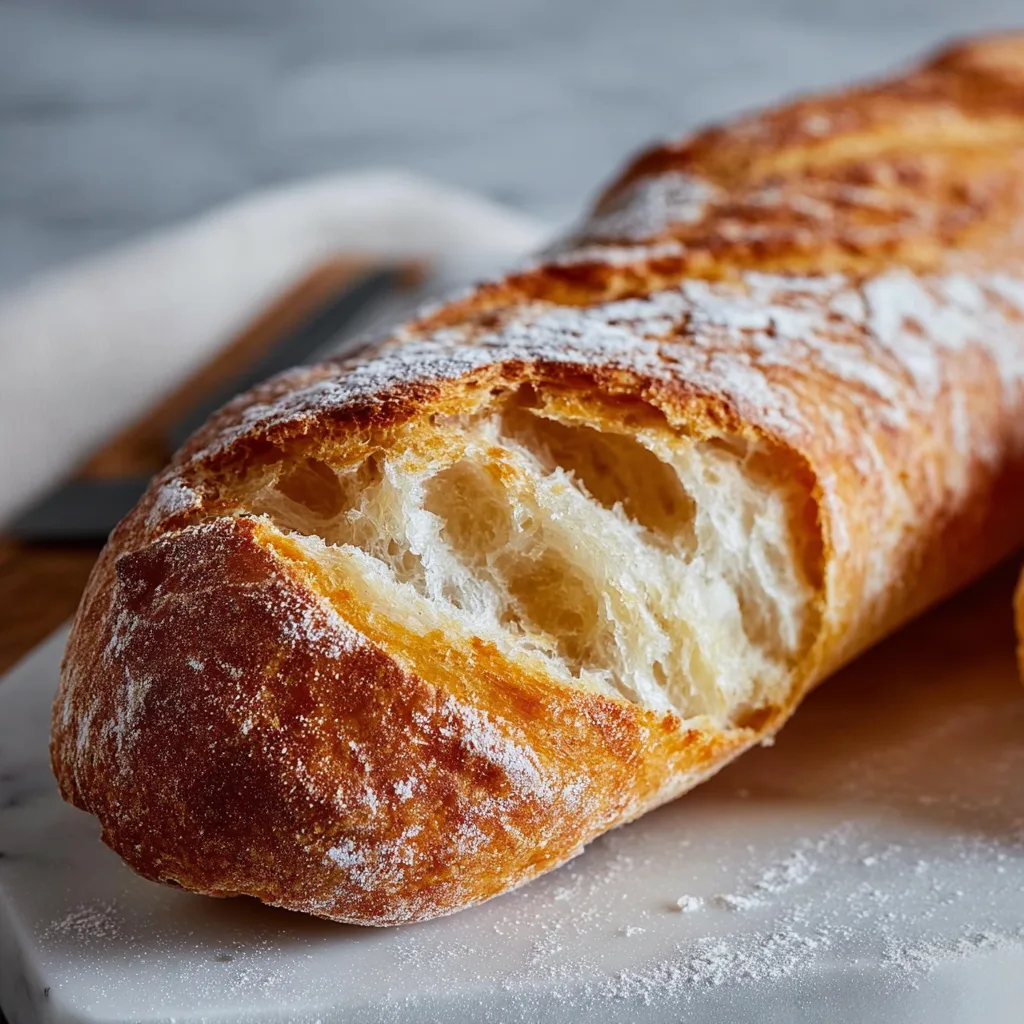
This Homemade Baguette Recipe captures everything that makes a classic French loaf so beloved. You don’t need a bakery or fancy equipment — just simple ingredients, a little patience, and the right technique. Whether you’re serving it with butter at breakfast, pairing it with cheese, or dunking it into a hearty soup, this recipe delivers the kind of crust and crumb that makes a baguette unforgettable.
What Is a Baguette?
A baguette is a long, thin loaf of French bread known for its crispy crust and chewy interior. Its name literally means “stick” or “wand” — a nod to its signature shape. Traditionally made from only flour, water, yeast, and salt, the beauty of a baguette lies in its simplicity. The long fermentation process develops complex flavor and texture, creating a loaf that’s crisp outside and full of air pockets inside.
Why You’ll Love This Homemade Baguette Recipe
- Simple ingredients: Only 4 pantry staples — flour, water, salt, and yeast.
- Beautifully crisp crust: Achieved by using steam in the oven and high baking temperature.
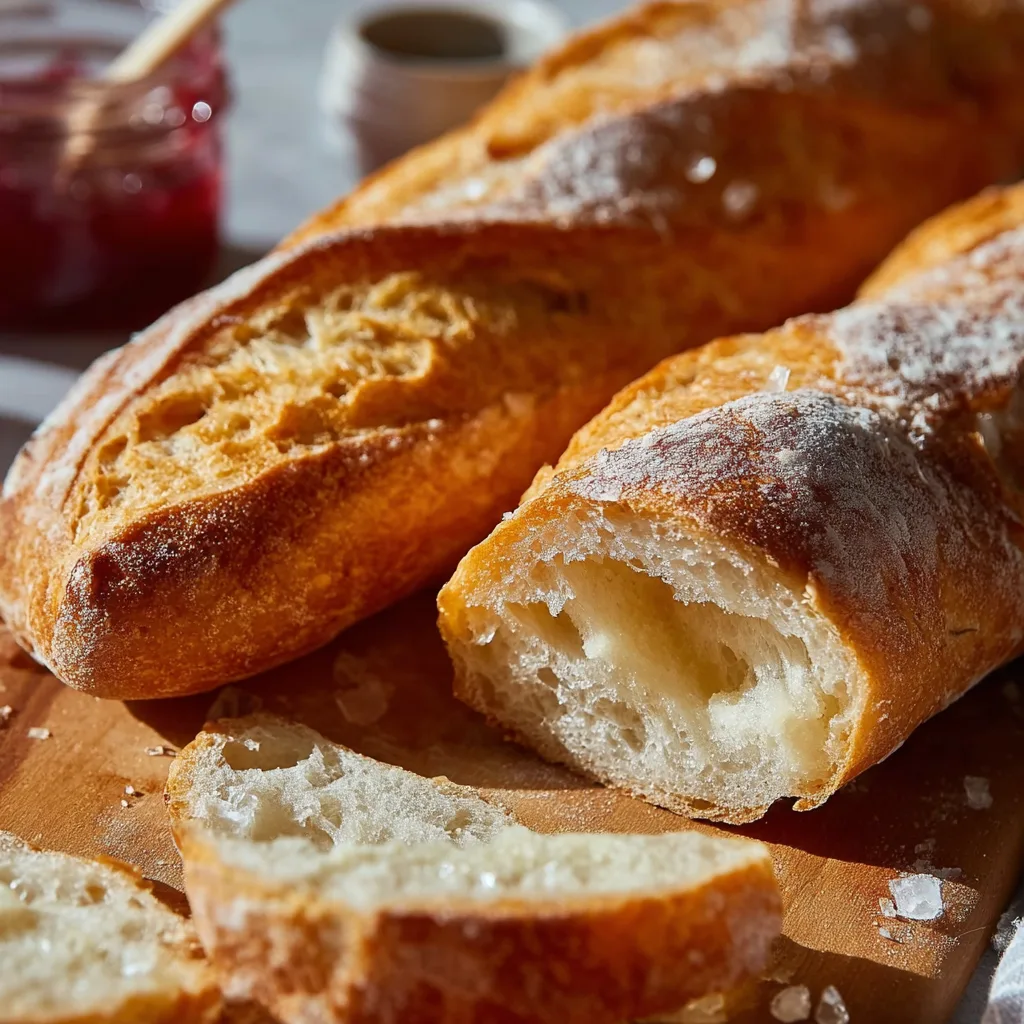
- Perfect crumb: Soft, light, and full of airy holes — ideal for sandwiches or dipping.
- Beginner-friendly: Step-by-step instructions make it accessible even if it’s your first bread recipe.
- Freezable and versatile: Keep extras for later or use them in bruschetta, crostini, or French toast.
Ingredients
For the Baguette Dough
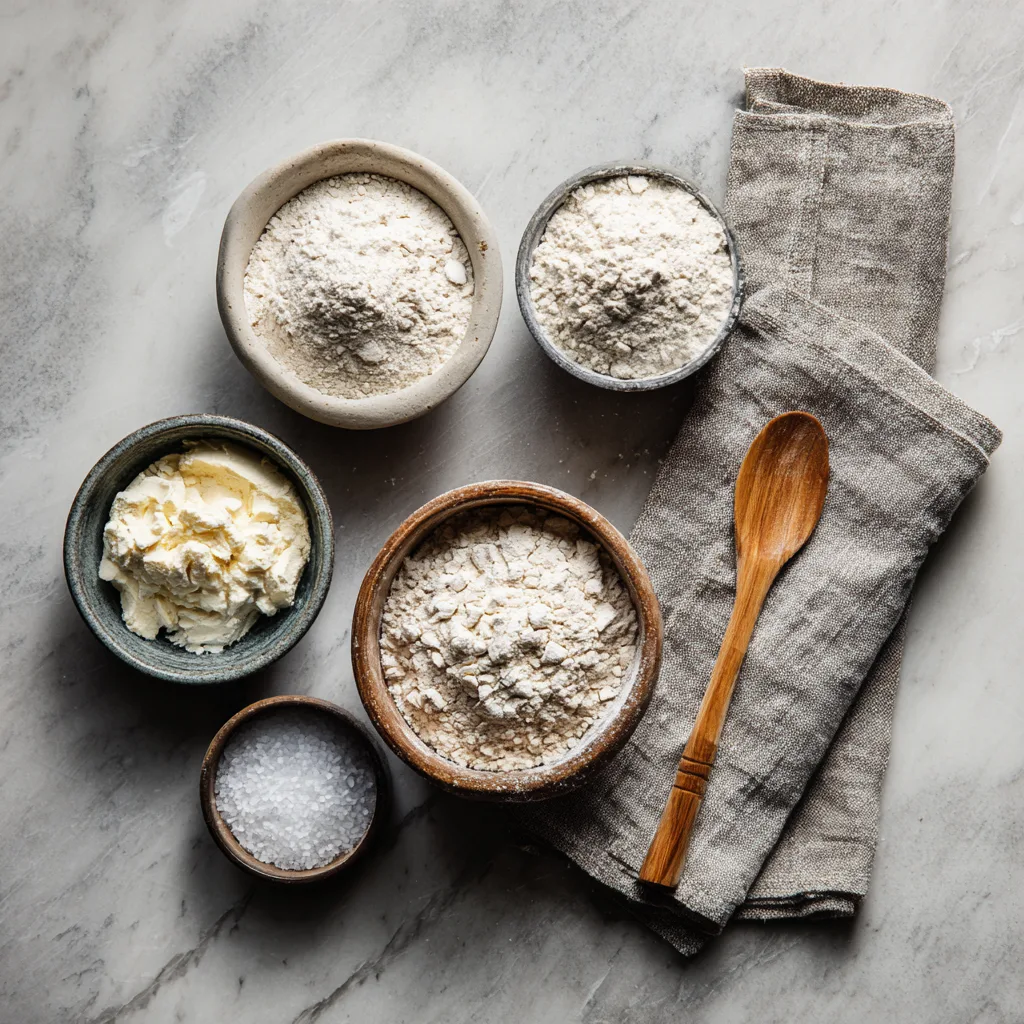
- 3 ½ cups (450 g) all-purpose flour or bread flour
- 1 ½ teaspoons salt
- 1 teaspoon active dry yeast
- 1 ½ cups (360 ml) warm water (about 105°F / 40°C)
For Finishing
- A little extra flour for dusting
- Water for steam during baking
Instructions
1. Make the Dough:
In a large mixing bowl, combine warm water and yeast. Let it sit for 5–10 minutes until the yeast becomes foamy. Add flour and salt. Stir with a wooden spoon until a sticky dough forms. The dough should be tacky but not overly wet.
2. First Rise (Bulk Fermentation):
Cover the bowl with a clean towel or plastic wrap. Let the dough rest at room temperature for 1 to 1½ hours, or until doubled in size. For better flavor, refrigerate overnight for a slow fermentation — this creates a more developed, slightly tangy taste and an open crumb.
3. Fold the Dough (Optional):
During the first rise, you can perform 2–3 “stretch and fold” sets every 30 minutes. To do this, grab one edge of the dough, stretch it up gently, and fold it over. Repeat on all sides. This helps strengthen the gluten and improve the structure.
4. Shape the Baguettes:
Lightly flour your countertop and turn out the dough. Divide it into 2 or 3 equal portions, depending on your desired loaf size. Flatten each piece gently into a rectangle, then roll it tightly from top to bottom to form a log. Pinch the seam closed and taper the ends slightly to form the classic baguette shape.
5. Second Rise:
Place each shaped loaf on a lightly floured parchment sheet or a baguette pan. Cover with a damp towel and let rise for 30–40 minutes, until puffy but not doubled.
6. Preheat the Oven:
Preheat your oven to 475°F (245°C). If possible, place a baking stone or inverted baking sheet inside to preheat. Put an empty metal baking dish on the bottom rack — you’ll pour water into it later to create steam.
7. Score the Baguettes:
Right before baking, use a sharp blade or bread lame to make 3–4 diagonal slashes across each loaf. This helps the bread expand properly in the oven.
8. Bake with Steam:
Transfer the baguettes (on their parchment) to the preheated stone or baking sheet. Immediately pour 1 cup of hot water into the empty pan below and close the oven door quickly to trap the steam. Bake for 20–25 minutes, until the crust is deep golden brown and crisp.
9. Cool Completely:
Transfer baguettes to a wire rack and cool for at least 20 minutes before slicing. The interior continues to set as it cools — cutting too early can make it gummy.
Homemade Baguette
Ingredients
Equipment
Method
- Combine warm water and yeast in a bowl; let sit 5–10 minutes until foamy.
- Add flour and salt; mix until a sticky dough forms.
- Cover and let rise for 1–1½ hours, or refrigerate overnight for deeper flavor.
- Divide dough into 2–3 pieces and shape each into a baguette by rolling into long logs.
- Place loaves on floured parchment, cover, and rise 30–40 minutes.
- Preheat oven to 475°F (245°C) with a baking stone and an empty pan for steam.
- Slash loaves diagonally and bake with steam for 20–25 minutes until golden brown.
- Cool on a wire rack before slicing.
Notes
Pro Tips for Perfect Homemade Baguettes
- Use bread flour for a chewier texture and stronger gluten network.
- Don’t rush fermentation: Slow rise equals better flavor and structure. Overnight fermentation in the fridge is worth it.
- Steam matters: Steam keeps the crust soft during the initial bake so the baguette can expand before crisping up.
- Score confidently: Use quick, shallow slashes for professional-looking loaves.
- Avoid too much flour: Dust lightly to prevent sticking, but too much will dry out the crust.
How to Serve Homemade Baguettes
Homemade baguettes are as versatile as they are delicious. Here are some classic and creative ways to enjoy them:
- With butter and jam: The simplest and most beloved breakfast combo.
- Bruschetta or crostini: Toasted slices topped with tomato, basil, and olive oil.
- Sandwiches: Perfect for hearty sandwiches like caprese or turkey & cheese.
- Soups and stews: Ideal for dipping into tomato soup, French onion, or creamy chowder.
- Charcuterie boards: Slice and serve alongside cheeses, meats, and olives.
- Garlic bread: Slice lengthwise, add butter and garlic, then toast until golden.
Storing and Freezing Baguettes
- At room temperature: Wrap cooled baguettes in a kitchen towel and store up to 2 days.
- To refresh: Pop day-old baguette in a 350°F oven for 5 minutes to restore the crust.
- To freeze: Wrap tightly in foil or a freezer bag. Reheat directly from frozen at 375°F for 10–12 minutes.
Variations and Flavor Additions
1. Whole Wheat Baguette: Replace up to 1 cup of all-purpose flour with whole wheat flour for added nutrition and nuttiness.
2. Garlic & Herb Baguette: Add 1 tablespoon olive oil and 1 teaspoon each of dried rosemary and garlic powder to the dough.
3. Cheese Baguette: Sprinkle grated Gruyère or Parmesan inside the dough as you roll it up before shaping.
4. No-Knead Baguette: Skip kneading entirely. Mix ingredients and refrigerate overnight, then shape and bake directly.
5. Mini Baguettes: Divide the dough into smaller pieces and bake for 15–18 minutes — perfect for party appetizers.
Common Mistakes to Avoid
- Using too much flour: Sticky dough is normal — resist the urge to add more flour.
- Skipping steam: Steam is crucial for achieving the signature crisp crust.
- Underbaking: Baguettes should be deeply golden; pale loaves will lack crunch and flavor.
- Cutting too soon: Patience is key — allow at least 20 minutes of cooling time.
Fun Fact: The French Law of the Baguette
Did you know? In France, a “traditional baguette” must legally be made only with flour, water, salt, and yeast — no preservatives or additives allowed. The baguette is so culturally important that there are annual competitions to crown the best baker in Paris!
Final Thoughts
Baking a Homemade Baguette is one of the most rewarding kitchen projects you can take on. It’s humble yet sophisticated, rustic yet refined. With just a handful of ingredients and a bit of patience, you can create a loaf that rivals any French bakery — golden, crusty, and full of that irresistible aroma that fills your home.
Serve it fresh from the oven with butter, or save a loaf for tomorrow’s sandwiches. Either way, you’ll never look at store-bought bread the same again.