How to Make Homemade Pasta (Without a Machine)
There is something magical about making homemade pasta without a machine. Just flour, eggs, and your hands transforming into silky ribbons of fresh pasta from scratch. No fancy equipment. No pasta roller. Just a rolling pin, a clean countertop, and a little patience.
If you’ve ever wondered how to make pasta by hand, this guide will walk you through everything you need to know. From mixing the dough to rolling it thin and cutting it into rustic noodles, this easy pasta dough recipe proves that authentic, fresh pasta is completely achievable in your own kitchen.
And once you taste it? You may never go back to boxed pasta again.
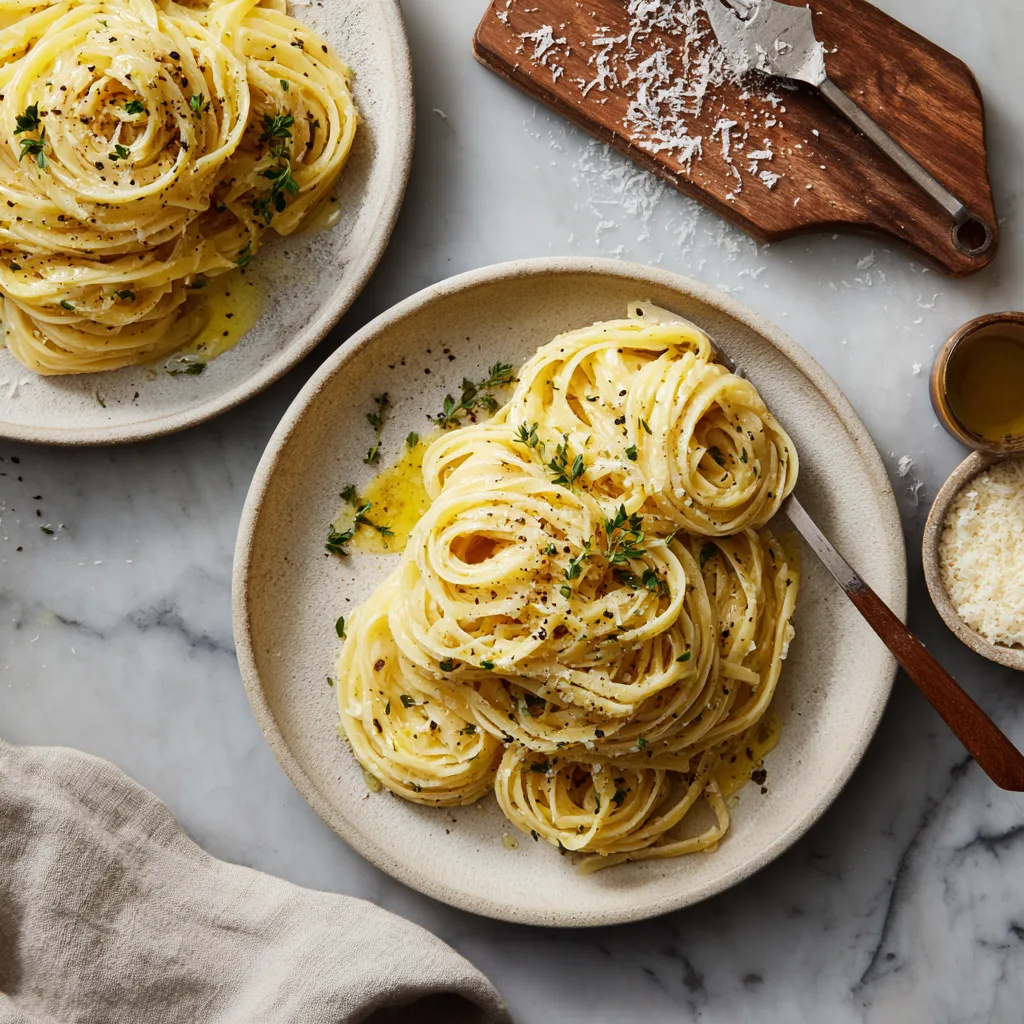
Why Make Homemade Pasta Without a Machine?
Making pasta by hand connects you to centuries of culinary tradition. Long before electric mixers and pasta rollers existed, families across regions like Tuscany and Emilia-Romagna were making pasta with nothing but flour, eggs, and wooden boards.
When you prepare fresh pasta from scratch:
- The texture is silkier and more tender.
- The flavor is richer and more delicate.
- The cooking time is dramatically shorter.
- You control every ingredient.
Plus, learning how to make pasta without a machine builds real kitchen confidence. It’s simpler than you think.
Ingredients
- 2 cups all-purpose flour (plus extra for dusting)
- 3 large eggs (room temperature)
- 1 tablespoon olive oil
- 1/2 teaspoon salt
- 1–2 tablespoons water (only if needed)
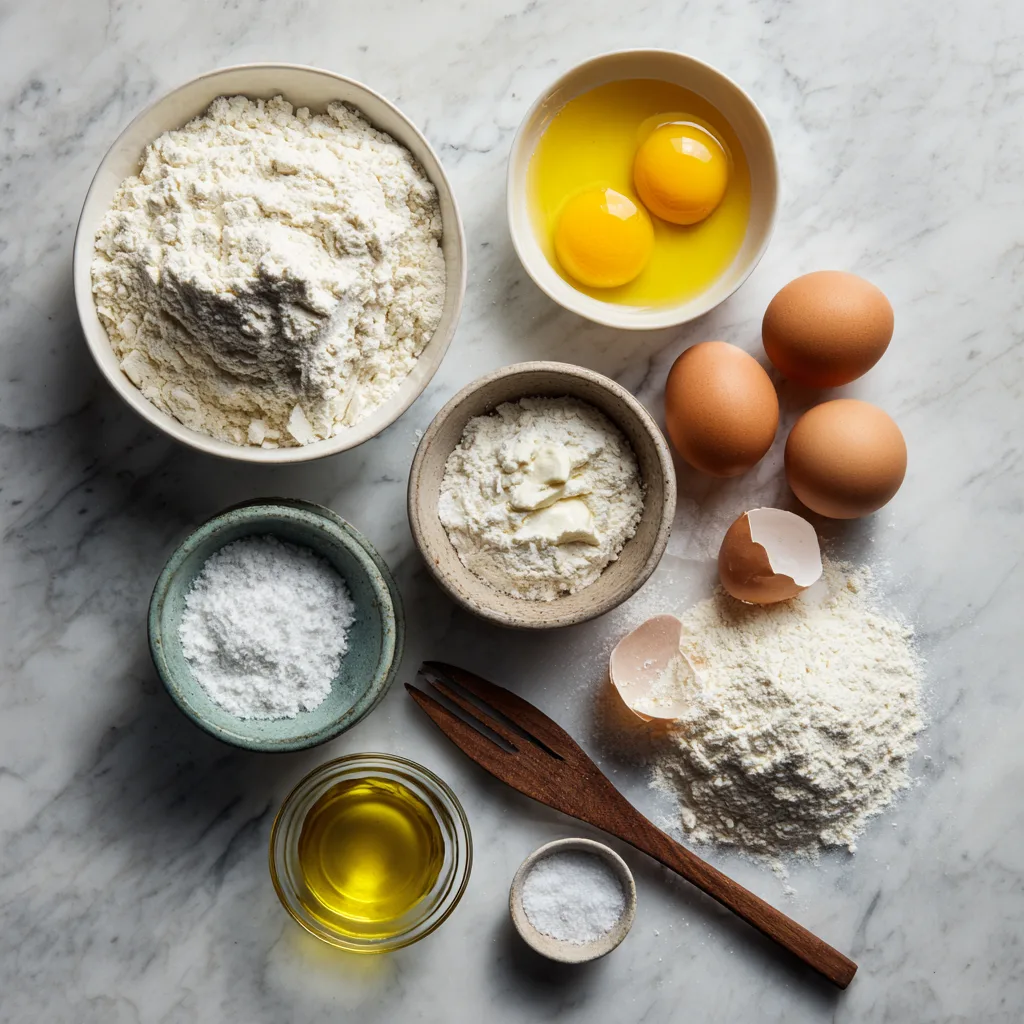
That’s it. No preservatives. No additives. Just pantry staples.
Choosing the Right Flour
Traditionally, Italian pasta uses “00” flour, which is very finely milled. However, for this easy pasta dough recipe, all-purpose flour works beautifully and is widely available.
If you want slightly more bite and structure, you can replace 1/2 cup of the all-purpose flour with semolina flour. This creates a more rustic texture that pairs well with hearty sauces.
Instructions
1. Create the Flour Well
Pour the flour directly onto a clean countertop or into a large mixing bowl. Form it into a mound and create a deep well in the center, like a small crater.
This well is where the eggs will go — it keeps everything contained while you mix.
2. Add Eggs, Salt, and Oil
Crack the eggs into the center of the well. Add the salt and olive oil.
Using a fork, gently whisk the eggs, gradually pulling small amounts of flour from the inner edges of the well into the egg mixture. Work slowly to prevent the eggs from spilling.
3. Form the Dough
As the mixture thickens, use your hands to bring everything together into a shaggy dough. If it feels too dry and crumbly, add a teaspoon of water at a time. If it feels sticky, sprinkle in a bit more flour.
The goal is a dough that feels firm but pliable — not sticky.
4. Knead the Dough
Kneading is the key to strong gluten development, which gives pasta its signature chew.
Press the dough forward with the heel of your hand, fold it back over itself, rotate, and repeat. Continue kneading for about 8–10 minutes.
You’ll know it’s ready when:
- The surface becomes smooth.
- It springs back when lightly pressed.
- It feels elastic, not crumbly.
5. Rest the Dough
Wrap the dough tightly in plastic wrap or cover with a bowl. Let it rest at room temperature for 30 minutes.
This resting period allows the gluten to relax, making it easier to roll thin without shrinking back.
Do not skip this step.
6. Divide and Roll
Cut the dough into two portions. Keep one covered while you work with the other.
Lightly flour your surface. Using a rolling pin, begin rolling from the center outward, rotating the dough frequently to maintain an even thickness.
Keep rolling until the sheet is very thin — about 1–2 mm thick. You should almost be able to see your hand through it.
This step takes patience, but it’s completely doable without a machine.
7. Fold and Cut
Lightly dust the sheet with flour. Gently fold it into loose thirds (like folding a letter).
Using a sharp knife, slice into strips:
- 1/4 inch for fettuccine
- 1/8 inch for tagliolini
- Wider strips for pappardelle
Unfold the strands and toss lightly in flour to prevent sticking.
8. Cook the Fresh Pasta
Bring a large pot of salted water to a rolling boil.
Fresh pasta cooks much faster than dried pasta — typically 2–4 minutes. Once it floats and feels tender yet slightly firm, it’s ready.
Drain immediately and toss with your favorite sauce.
Homemade Pasta (Without a Machine)
Ingredients
Equipment
Method
- Place flour on a clean surface and form a well in the center.
- Add eggs, olive oil, and salt into the well. Gradually mix flour into the eggs using a fork.
- Bring mixture together into a shaggy dough and knead for 8–10 minutes until smooth.
- Wrap dough and rest for 30 minutes at room temperature.
- Divide dough and roll thin using a rolling pin.
- Fold loosely and slice into desired noodle width.
- Boil salted water and cook fresh pasta 2–4 minutes until tender.
Notes
Tips for Perfect Homemade Pasta Without a Machine
Use Room Temperature Eggs
Cold eggs can stiffen the dough and make it harder to combine.
Don’t Over-Flour
Too much flour makes the pasta tough. Use just enough to prevent sticking.
Roll Thin Enough
If it looks thin, roll it thinner. Properly rolled fresh pasta should be delicate and slightly translucent.
Work in Batches
Keeping unused dough covered prevents it from drying out.
Common Mistakes to Avoid
Skipping the resting time – This leads to shrinkage when rolling.
Not kneading enough – Under-kneaded dough will tear easily.
Cooking too long – Fresh pasta cooks quickly. Overcooking makes it mushy.
Flavor Variations
Once you master the base recipe, try these creative twists:
Spinach Pasta
Blend 1/4 cup cooked, drained spinach into the eggs before mixing.
Herb Pasta
Add 1 tablespoon finely chopped fresh herbs (like basil or parsley) to the dough.
Whole Wheat Version
Replace 1 cup of all-purpose flour with whole wheat flour for a nuttier flavor.
Best Sauces for Fresh Pasta
Fresh pasta pairs beautifully with lighter sauces because its texture is delicate.
Try it with:
- Brown butter and sage
- Garlic and olive oil
- Fresh tomato sauce
- Creamy Alfredo
- Lemon and Parmesan
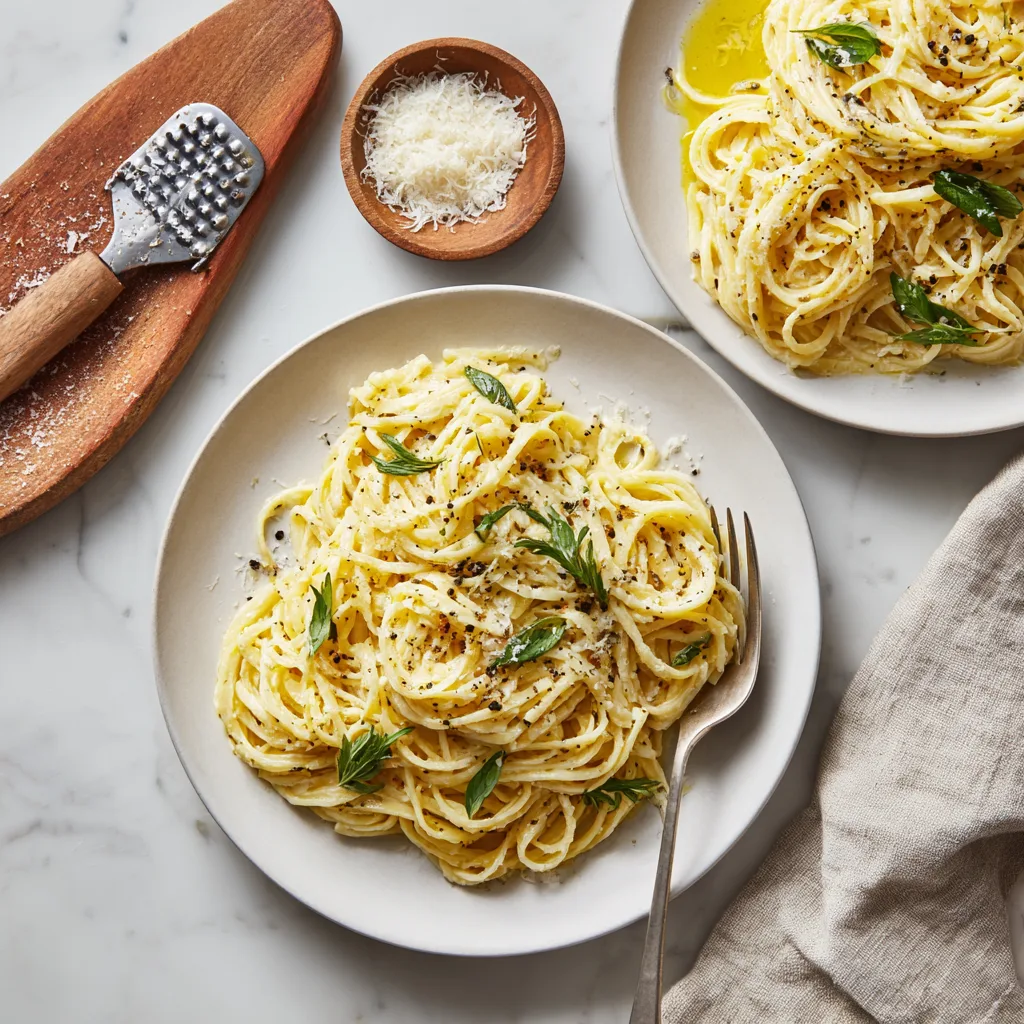
Because this is fresh pasta from scratch, it absorbs sauce more effectively than dried pasta, enhancing every bite.
Serving Suggestions
Serve your homemade pasta immediately after cooking for the best texture.
Top with:
- Freshly grated Parmesan
- Cracked black pepper
- Extra virgin olive oil
- Fresh herbs
Pair it with a crisp green salad and warm bread for a complete Italian-inspired meal.
Storage and Freezing
To Store:
Dust noodles with flour and refrigerate in an airtight container for up to 24 hours.
To Freeze:
Arrange pasta in small nests on a floured tray. Freeze until solid, then transfer to a freezer bag.
Cook directly from frozen — just add an extra minute to cooking time.
Cultural Connection
Making pasta by hand is deeply rooted in Italian family tradition. In many households, Sunday pasta-making was a ritual passed down through generations.
Learning how to make pasta without a machine connects you to that tradition — even if you’re thousands of miles away.
Why This Easy Pasta Dough Recipe Works
The combination of eggs and flour creates structure and elasticity. Olive oil adds slight tenderness, and proper kneading ensures the dough stretches without tearing.
By controlling hydration and rolling thickness, you achieve restaurant-quality pasta — without special equipment.
Final Thoughts
Homemade pasta without a machine is not just a recipe — it’s a skill. One that brings pride, creativity, and incredible flavor to your kitchen.
Once you experience the silky texture and rich taste of fresh pasta from scratch, you’ll realize how simple ingredients can create something extraordinary.
All you need is flour, eggs, and your hands.
And now, you know exactly how to make pasta by hand.