Korean BBQ Steak Rice Bowls with Spicy Cream Sauce
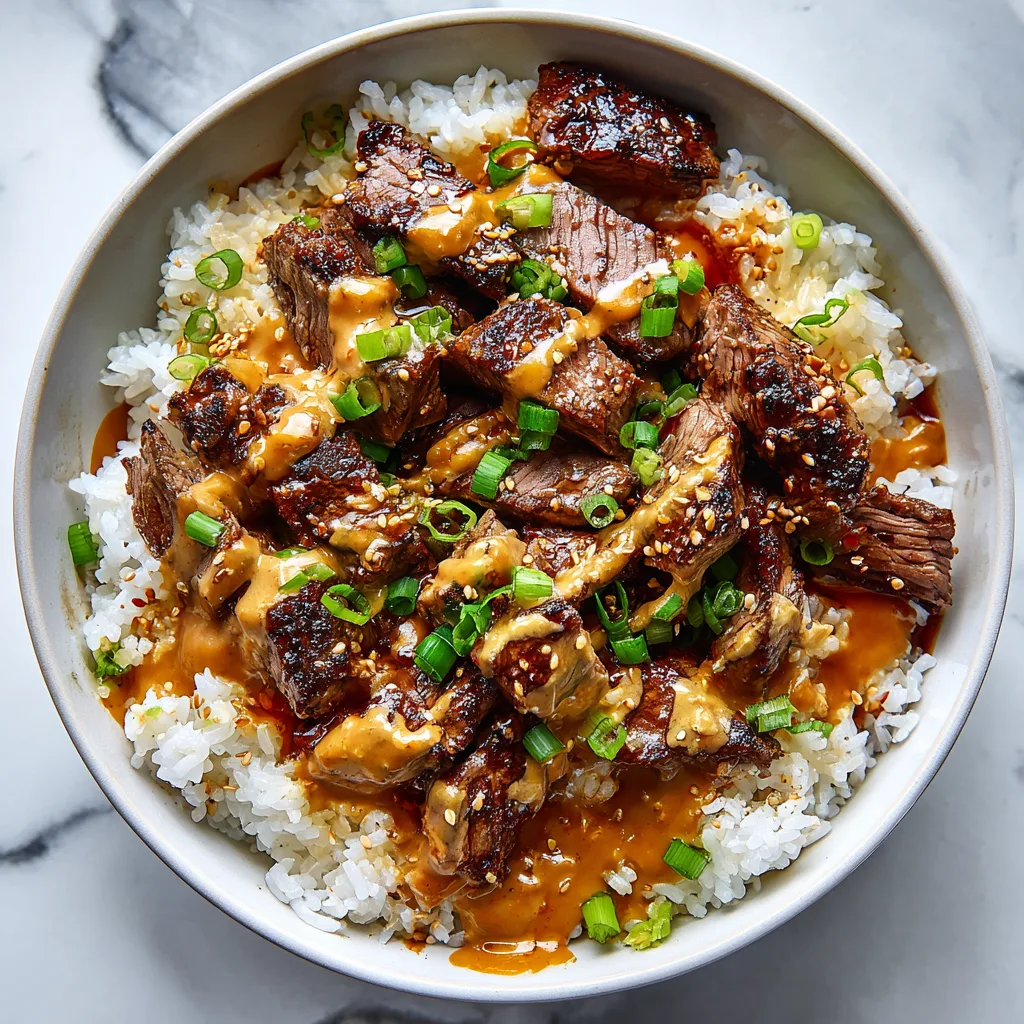
Transform your weeknight dinners into an exciting culinary adventure with these Korean BBQ Steak Rice Bowls with Spicy Cream Sauce! This restaurant-quality dish brings together tender, perfectly seared steak, fluffy rice, and an irresistibly creamy, spicy sauce that will have your taste buds dancing. Whether you’re looking for a quick family dinner or meal prep inspiration, these bowls deliver bold flavors and satisfying textures in every bite. The combination of savory Korean-inspired seasonings with a rich, tangy cream sauce creates a fusion experience that’s both comforting and adventurous.
Why You’ll Fall in Love with These Korean BBQ Steak Rice Bowls
Korean BBQ has taken the culinary world by storm, and for good reason. The combination of sweet, salty, and umami flavors creates an addictive taste profile that keeps you coming back for more. These steak rice bowls capture all the essence of Korean BBQ while adding a unique twist with the spicy cream sauce that elevates the entire dish to new heights. The beauty of this recipe lies in its versatility – you can adjust the spice level to your preference, swap proteins based on what you have available, and customize the toppings to suit your family’s tastes. Plus, with a preparation time of just 30 minutes from start to finish, this meal is perfect for busy weeknights when you want something special without spending hours in the kitchen.
The Secret Behind the Perfect Spicy Cream Sauce
What truly sets these bowls apart is the incredible spicy cream sauce that ties everything together. This sauce is a game-changer – it’s creamy, tangy, slightly sweet, and has just the right amount of heat to keep things interesting. The base combines mayonnaise with Korean gochugaru (red pepper flakes) for that signature Korean heat, while soy sauce adds depth and umami richness. A touch of rice vinegar provides brightness and cuts through the richness, and a hint of sesame oil brings a nutty, toasted flavor that’s quintessentially Korean. When drizzled over the hot steak and rice, this sauce creates pockets of flavor that make every bite unique. The thick, glossy consistency coats the meat beautifully and seeps into the rice, ensuring that no component goes unseasoned.
Selecting and Preparing Your Steak
The foundation of these bowls is, of course, the steak. For the best results, choose a cut that’s well-marbled and tender, such as ribeye, sirloin, or New York strip. The marbling is crucial because as the fat renders during cooking, it bastes the meat from within, keeping it juicy and flavorful. Before cooking, let your steak come to room temperature for about 20 minutes – this ensures even cooking throughout. Season generously with salt and pepper, and consider adding a light coating of soy sauce and a sprinkle of brown sugar to create that caramelized crust that’s characteristic of Korean BBQ. When searing the steak, make sure your pan is screaming hot before the meat touches it. This high heat creates the Maillard reaction, that beautiful brown crust that’s packed with flavor. Don’t move the steak around too much – let it develop that crust undisturbed for 3-4 minutes per side for medium-rare perfection.
Building the Perfect Rice Base
While the steak is often the star of the show, the rice plays an equally important supporting role. For authentic Korean-style bowls, short-grain white rice is preferred because of its slightly sticky texture that holds together well and soaks up the sauce beautifully. Cook your rice according to package directions, but consider adding a small piece of kombu (dried kelp) to the cooking water for extra umami depth. If you want to take things up a notch, try making your rice in beef broth instead of water – this adds another layer of savory richness that complements the steak perfectly. Once cooked, fluff the rice gently with a fork and let it sit uncovered for a few minutes to release excess steam. This prevents the rice from becoming mushy when you add the hot steak and sauce.
Ingredients
Steak Marinade and Seasoning:
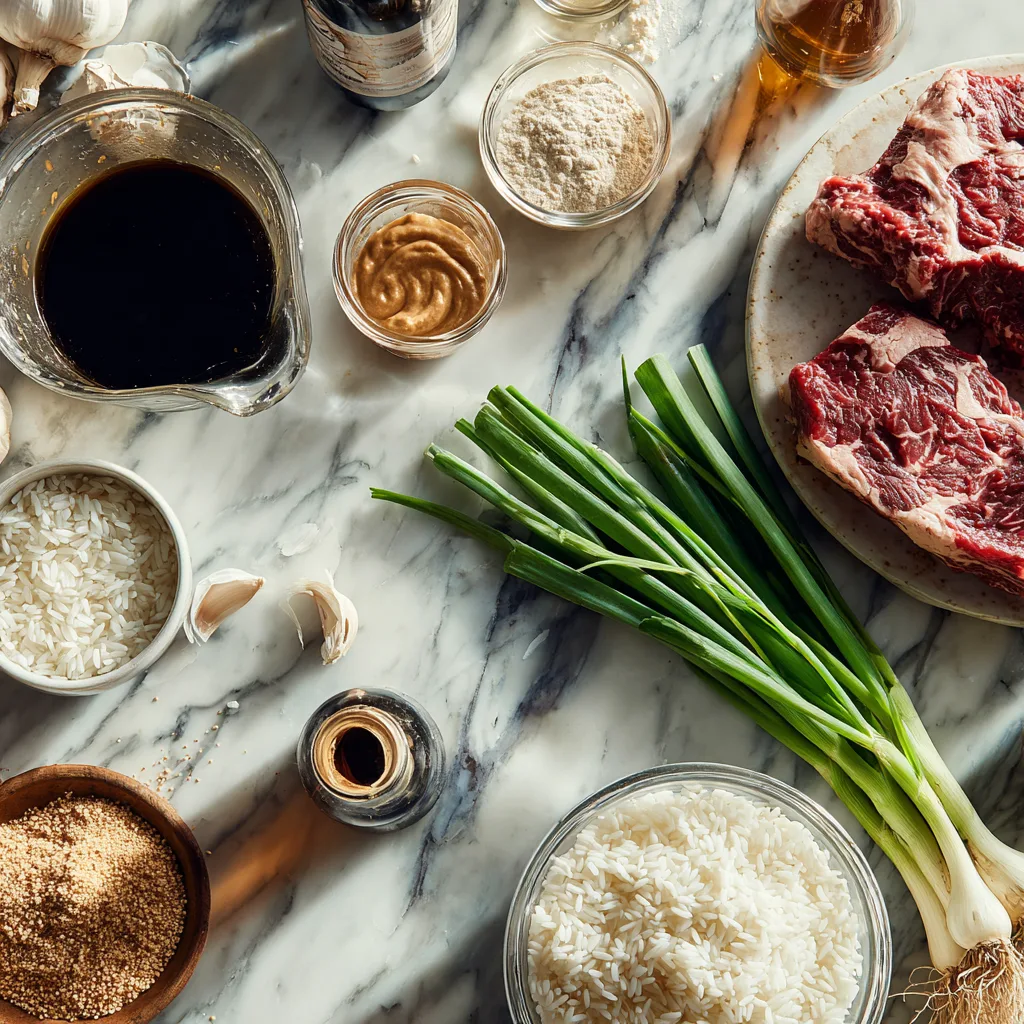
- 1.5 pounds ribeye or sirloin steak
- 3 tablespoons soy sauce
- 2 tablespoons brown sugar
- 1 tablespoon sesame oil
- 4 cloves garlic, minced
- 1 teaspoon fresh ginger, grated
- Black pepper to taste
- 1 tablespoon vegetable oil for cooking
Rice Base:
- 2 cups short-grain white rice
- 3 cups water or beef broth
- Pinch of salt
Spicy Cream Sauce:
- 1/2 cup mayonnaise
- 2 tablespoons Korean red pepper flakes (gochugaru)
- 1 tablespoon soy sauce
- 1 tablespoon rice vinegar
- 1 teaspoon sesame oil
- 1 teaspoon honey or brown sugar
- 1 clove garlic, minced
Toppings and Garnish:
- 4 green onions, thinly sliced
- 1 tablespoon sesame seeds
- Optional: kimchi, pickled vegetables, cucumber slices
Instructions
- Start by preparing the rice according to package directions, using water or beef broth. While the rice cooks, proceed with the remaining steps.
- In a small bowl, whisk together soy sauce, brown sugar, sesame oil, minced garlic, and grated ginger to create the steak marinade.
- Pat the steak dry with paper towels and coat it evenly with the marinade. Let it sit at room temperature for 15-20 minutes to absorb the flavors.
- While the steak marinates, prepare the spicy cream sauce by combining mayonnaise, Korean red pepper flakes, soy sauce, rice vinegar, sesame oil, honey, and minced garlic in a bowl. Whisk until smooth and well combined. Adjust seasoning to taste and set aside.
- Heat a large cast-iron skillet or heavy-bottomed pan over high heat. Add vegetable oil and let it heat until it shimmers.
- Carefully place the marinated steak in the hot pan. Sear without moving for 3-4 minutes until a dark brown crust forms.
- Flip the steak and cook for another 3-4 minutes for medium-rare, or adjust cooking time based on your preferred doneness. Use a meat thermometer to check internal temperature (135°F for medium-rare, 145°F for medium).
- Transfer the cooked steak to a cutting board and let it rest for 5-10 minutes. This crucial step allows the juices to redistribute throughout the meat, ensuring maximum tenderness.
- While the steak rests, slice the green onions thinly and prepare any additional toppings you’d like to include.
- After resting, slice the steak against the grain into thin strips. Cutting against the grain shortens the muscle fibers, making each bite more tender.
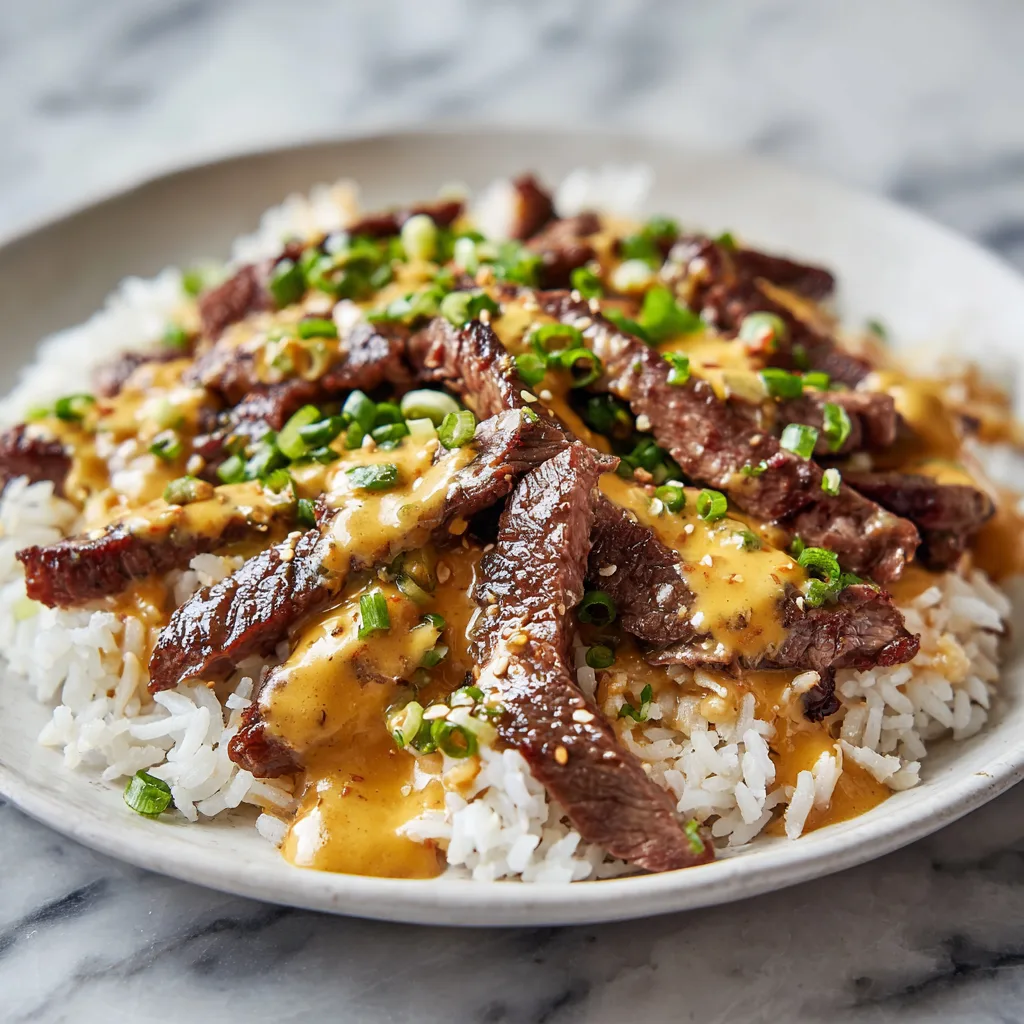
- To assemble the bowls, divide the cooked rice among serving bowls. Arrange the sliced steak over the rice in an attractive pattern.
- Drizzle the spicy cream sauce generously over the steak and rice. Don’t be shy with the sauce – it’s what makes these bowls truly special!
- Garnish with sliced green onions and sesame seeds. Add any optional toppings like kimchi or pickled vegetables for extra flavor and crunch.
- Serve immediately while the steak is still warm and the sauce is at its creamiest consistency.
Korean BBQ Steak Rice Bowls with Spicy Cream Sauce
Ingredients
Equipment
Method
- Prepare rice according to package directions using water or beef broth. Set aside when done.
- In a small bowl, whisk together soy sauce, brown sugar, sesame oil, minced garlic, and grated ginger for marinade.
- Pat steak dry and coat evenly with marinade. Let sit at room temperature for 15-20 minutes.
- Prepare spicy cream sauce by whisking together mayonnaise, Korean red pepper flakes, soy sauce, rice vinegar, sesame oil, honey, and minced garlic. Set aside.
- Heat cast-iron skillet over high heat. Add vegetable oil and let it shimmer.
- Place marinated steak in hot pan. Sear without moving for 3-4 minutes until dark crust forms.
- Flip steak and cook another 3-4 minutes for medium-rare (135°F internal temperature) or adjust to preference.
- Transfer steak to cutting board and rest for 5-10 minutes to allow juices to redistribute.
- Slice steak against the grain into thin strips.
- Divide cooked rice among serving bowls. Arrange sliced steak over rice.
- Drizzle spicy cream sauce generously over steak and rice.
- Garnish with sliced green onions, sesame seeds, and optional toppings. Serve immediately.
Notes
Mastering the Art of Steak Temperature
One of the most common mistakes when cooking steak is overcooking it. For these bowls, medium-rare to medium is ideal because the steak will be sliced thin and you want it to remain juicy and tender. Invest in a good instant-read thermometer – it’s the most reliable way to achieve perfect doneness every time. Remember that the steak will continue cooking slightly as it rests (this is called carryover cooking), so pull it from the heat when it’s about 5 degrees below your target temperature. For medium-rare, aim for 130-135°F; for medium, target 140-145°F. If you prefer your steak more well-done, that’s perfectly fine, but be aware that it may lose some of its juiciness. The key is consistency – once you find your preferred doneness, use the same temperature every time for reliable results.
Customization Ideas and Variations
The beauty of these Korean BBQ Steak Rice Bowls is their incredible versatility. While the recipe as written is absolutely delicious, there are countless ways to make it your own. For a lighter version, swap the white rice for cauliflower rice or quinoa. If you want to add more vegetables, consider including sautéed mushrooms, blanched bok choy, or roasted broccoli. The spicy cream sauce can be adjusted to your heat preference – add more gochugaru for extra kick, or reduce it for a milder version. You can also experiment with different proteins: this sauce works beautifully with chicken thighs, pork belly, or even crispy tofu for a vegetarian option. For added crunch and freshness, top your bowls with shredded lettuce, julienned carrots, or cucumber ribbons. Some people love adding a fried egg on top for extra richness and protein. The runny yolk mixes with the sauce to create an even more luxurious coating for the rice and meat.
Meal Prep and Storage Tips
These Korean BBQ Steak Rice Bowls are excellent for meal prep, making them perfect for busy professionals and families. To prep ahead, cook the rice and store it in airtight containers in the refrigerator for up to 4 days. The spicy cream sauce can be made in advance and stored in a sealed container for up to a week – in fact, the flavors often improve after a day or two as they meld together. For the steak, you have two options: cook it fresh when you’re ready to eat, or cook it in advance and reheat gently. If reheating, be careful not to overcook it further. The best method is to slice it first, then briefly warm it in a hot pan for just 30-60 seconds per side. Assemble your bowls just before eating, adding the sauce and fresh toppings at the last minute for the best texture and flavor. Store components separately to prevent the rice from becoming soggy.
Pairing Suggestions and Serving Ideas
While these bowls are substantial enough to stand alone as a complete meal, there are several side dishes that complement them beautifully. Traditional Korean banchan (side dishes) like kimchi, pickled radish, or seasoned spinach add authentic flair and provide contrasting flavors and textures. A simple cucumber salad with rice vinegar and sesame oil offers a refreshing counterpoint to the rich, spicy sauce. For drinks, consider serving Korean barley tea (boricha) or a light beer to cut through the richness. If you’re entertaining, this recipe scales beautifully for a crowd. Set up a DIY bowl bar with all the components laid out separately, allowing guests to customize their own bowls with their preferred amount of each ingredient. This interactive approach turns dinner into an experience and accommodates different dietary preferences and spice tolerances.
Bringing It All Together
Korean BBQ Steak Rice Bowls with Spicy Cream Sauce represent the perfect marriage of convenience and flavor. This dish proves that you don’t need hours of preparation or exotic ingredients to create something truly special. With just a few quality components and the right technique, you can transform simple ingredients into a restaurant-worthy meal that will impress family and guests alike. The combination of tender, perfectly cooked steak, fluffy rice, and that incredible spicy cream sauce creates a harmony of flavors and textures that’s both comforting and exciting. Whether you’re making this for a casual weeknight dinner or a special occasion, these bowls deliver satisfaction in every bite. The recipe is forgiving enough for beginners yet impressive enough for experienced cooks, making it a valuable addition to any home cook’s repertoire. So fire up your stove, grab your favorite cut of steak, and get ready to create some magic in your kitchen – your taste buds will thank you!