The Ultimate Creamy Bacon Carbonara: A Restaurant-Quality Dish in Your Own Kitchen
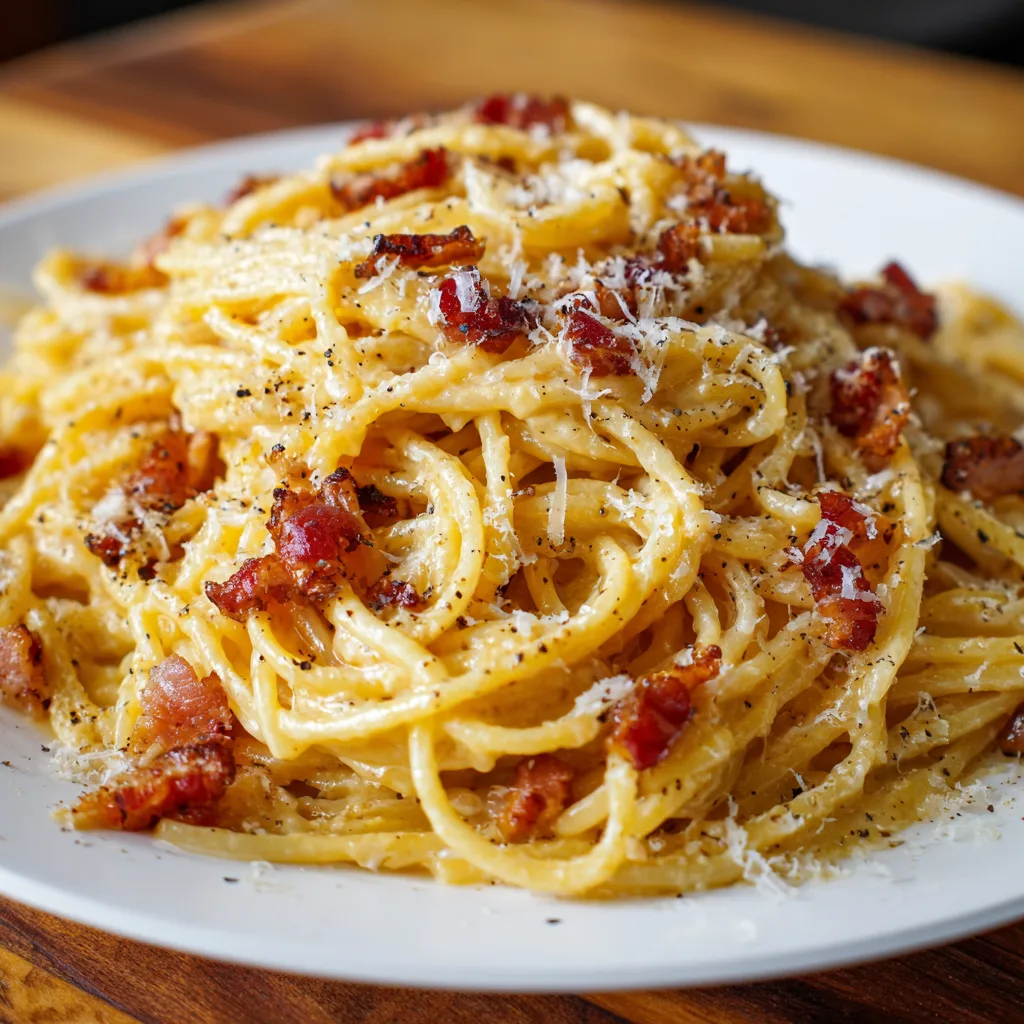
There’s something absolutely magical about the moment when silky eggs transform into a luxurious, creamy sauce that coats each strand of pasta perfectly. Creamy Bacon Carbonara represents the pinnacle of Italian comfort food, combining simple ingredients to create an extraordinarily satisfying dish that never fails to impress. This authentic recipe brings the essence of Rome directly to your dinner table, proving that sometimes the most remarkable meals come from the most humble ingredients.
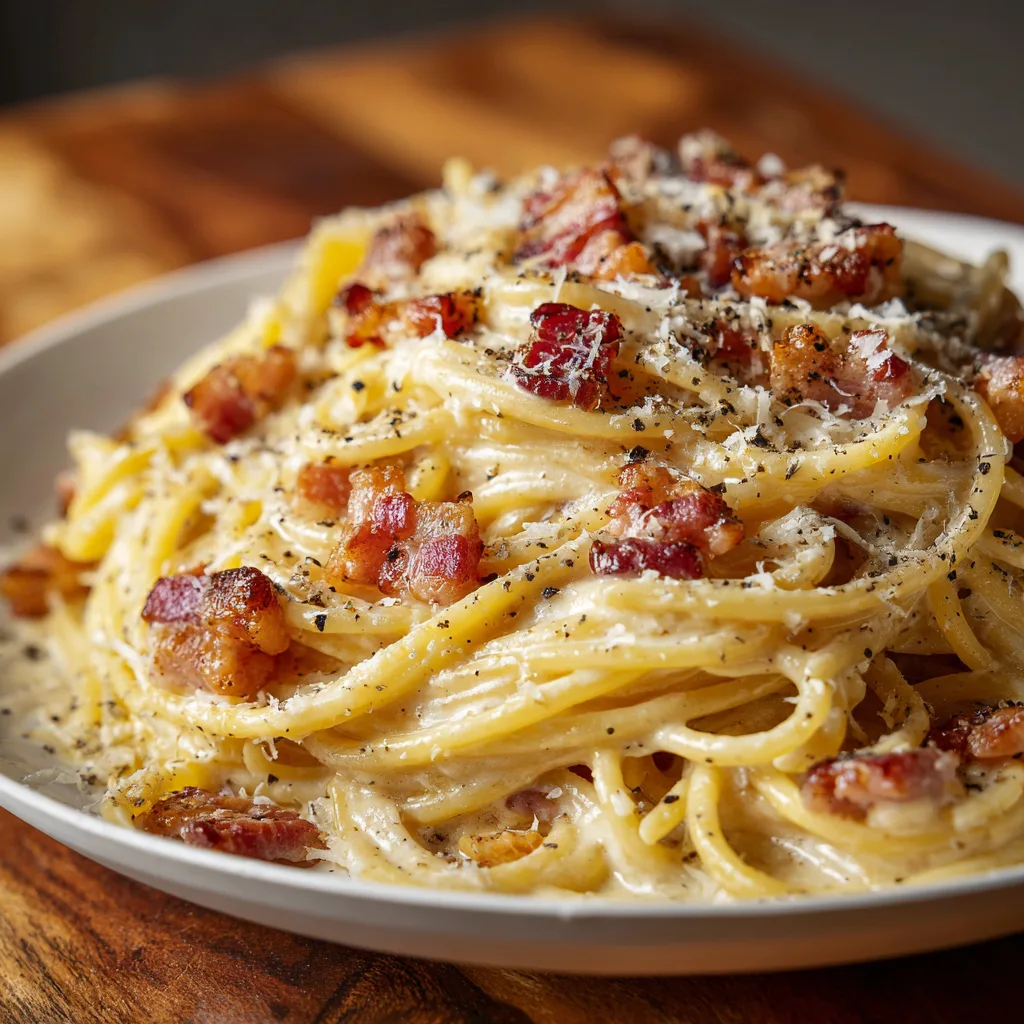
The beauty of carbonara lies in its elegant simplicity. Unlike many pasta dishes that rely on heavy cream or complex sauces, true carbonara achieves its signature creaminess through a masterful technique that emulsifies eggs, cheese, and pasta water into pure culinary gold. This traditional Roman dish has captured hearts worldwide, and once you master this recipe, you’ll understand why it’s considered one of the four classic Roman pasta dishes alongside Cacio e Pepe, Amatriciana, and Puttanesca.
What sets this particular carbonara recipe apart is its perfect balance of flavors and textures. The smoky, crispy bacon provides a delightful contrast to the smooth, velvety sauce, while freshly grated Parmesan cheese adds depth and richness that elevates every bite. The key to achieving restaurant-quality results at home lies in understanding the technique and timing, both of which we’ll explore in detail throughout this comprehensive guide.
The History and Heritage of Carbonara
Understanding the origins of carbonara enhances our appreciation for this timeless dish. While food historians debate its exact origins, most agree that carbonara emerged in Rome during the mid-20th century. Some believe it was created by Italian charcoal workers (carbonari) who needed a hearty, portable meal using readily available ingredients like eggs, cheese, and cured pork. Others suggest it developed during World War II when American soldiers shared their bacon rations with Italian cooks, leading to this delicious fusion of ingredients.
Regardless of its precise origins, carbonara quickly became a beloved staple throughout Italy and eventually gained international recognition. The traditional recipe calls for guanciale (cured pork jowl), but bacon serves as an excellent substitute that’s more readily available in most kitchens. The dish represents the Italian philosophy of using few, high-quality ingredients to create something truly extraordinary.
Why This Recipe Works Every Time
This foolproof carbonara recipe succeeds where others fail because it focuses on proper technique and temperature control. Many home cooks struggle with carbonara because they attempt to cook the eggs too aggressively, resulting in scrambled eggs rather than a smooth sauce. Our method ensures the eggs temper gradually, creating that signature creamy texture without any lumps or curdles.
The secret lies in understanding that carbonara isn’t actually cooked with heat after the eggs are added. Instead, the residual heat from the hot pasta and the warm pasta water gently cooks the eggs just enough to create a safe, silky sauce. This technique requires confidence and quick action, but once you master it, you’ll be able to create perfect carbonara every single time.
Additionally, this recipe emphasizes the importance of using the right pasta shape and achieving the proper pasta-to-sauce ratio. Long pasta varieties like spaghetti, linguine, or fettuccine work best because they hold the sauce beautifully, while the starch content of properly salted pasta water becomes crucial for achieving the ideal consistency.
Essential Tips for Carbonara Success
Temperature control is absolutely critical when making carbonara. The pasta should be hot but not scorching when you add the egg mixture. If the pasta is too hot, you’ll end up with scrambled eggs; if it’s too cool, the eggs won’t cook properly, and your sauce will remain thin and watery. Practice makes perfect, so don’t be discouraged if your first attempt isn’t restaurant-perfect.
Timing is equally important. Have all your ingredients prepared and ready before you start cooking because carbonara comes together very quickly once the pasta is done. The bacon should be perfectly crispy, the eggs should be at room temperature and well-beaten with cheese, and your serving bowls should be warmed and ready.
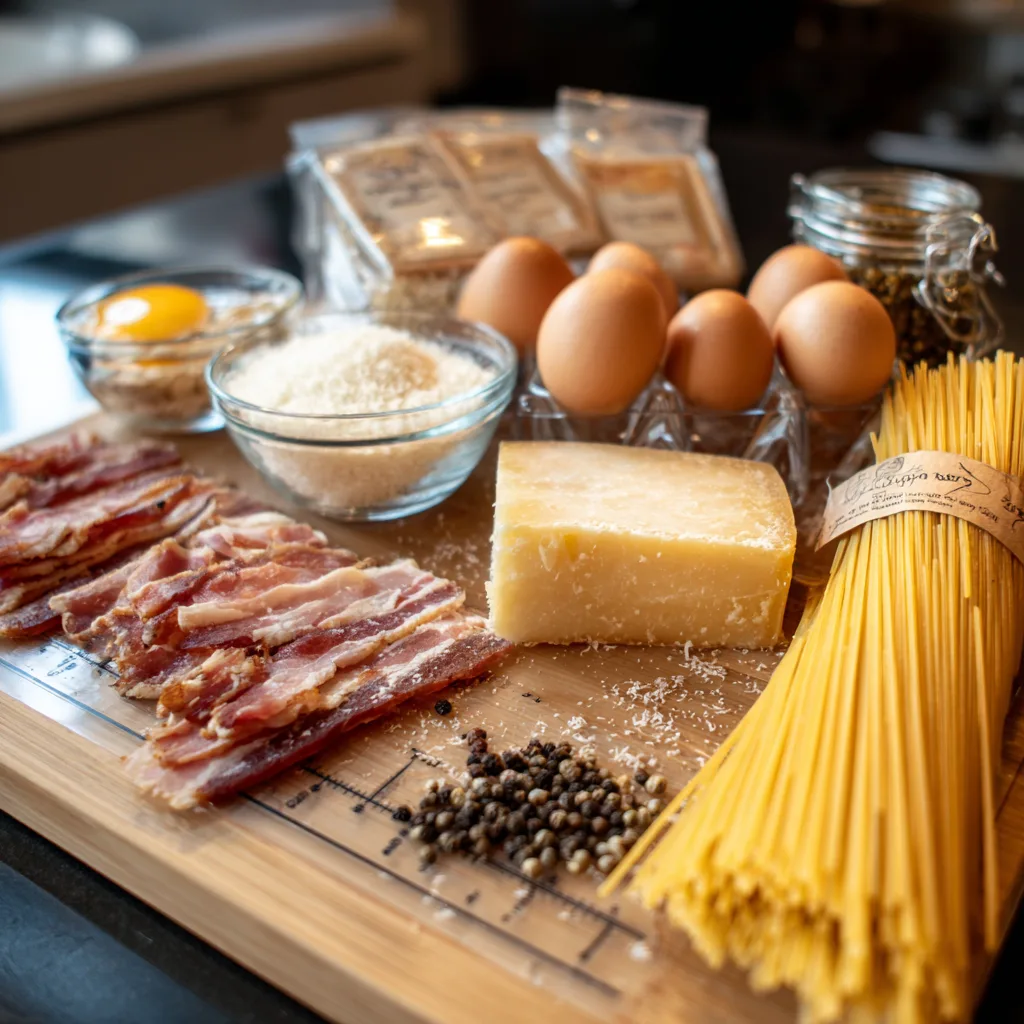
Quality ingredients make a noticeable difference in the final dish. Use the freshest eggs possible, preferably from pasture-raised chickens, and invest in good-quality Parmesan cheese that you grate yourself. Pre-grated cheese often contains anti-caking agents that can interfere with the sauce’s smoothness. Similarly, choose thick-cut bacon with good marbling for the best flavor and texture contrast.
Ingredients
For the Pasta:
- 1 pound spaghetti or linguine
- 2 tablespoons kosher salt for pasta water
For the Carbonara Sauce:
- 6 strips thick-cut bacon, diced
- 4 large eggs, room temperature
- 1 cup freshly grated Parmesan cheese, plus extra for serving
- 1/2 cup freshly grated Pecorino Romano cheese
- 1/2 teaspoon freshly cracked black pepper, plus extra for serving
- 2 cloves garlic, minced (optional, for extra flavor)
- 2 tablespoons fresh parsley, chopped for garnish
Instructions
- Prepare the pasta water and bring it to a rolling boil. Fill a large pot with water, add kosher salt, and bring to a vigorous boil. The water should taste like the sea – this seasoning is crucial for properly flavored pasta.
- Cook the bacon until perfectly crispy. In a large skillet or heavy-bottomed pan, cook diced bacon over medium heat until golden brown and crispy, about 8-10 minutes. Remove bacon with a slotted spoon, leaving the rendered fat in the pan.
- Create the egg and cheese mixture. In a large bowl, whisk together eggs, Parmesan cheese, Pecorino Romano, and black pepper until smooth and well combined. This mixture should be thick and creamy.
- Cook the pasta until al dente. Add pasta to the boiling water and cook according to package directions until just shy of al dente. Reserve 2 cups of starchy pasta water before draining.
- Combine pasta with bacon fat. Add the drained hot pasta directly to the skillet with bacon fat. If using garlic, add it now and toss for 30 seconds until fragrant.
- Create the carbonara sauce. Remove the skillet from heat. Quickly add 1/2 cup of pasta water to the hot pasta and immediately pour in the egg mixture while tossing vigorously with tongs or a large spoon.
- Achieve perfect consistency. Continue tossing and adding pasta water gradually until the sauce becomes creamy and coats each strand of pasta. This should take about 2-3 minutes of constant motion.
- Finish and serve immediately. Add the crispy bacon back to the pasta, toss once more, and serve immediately in warmed bowls topped with extra cheese, black pepper, and fresh parsley.
Creamy Bacon Carbonara
Ingredients
Equipment
Method
- Fill a large pot with water, add kosher salt, and bring to a vigorous boil.
- Cook diced bacon in a large skillet over medium heat until golden brown and crispy, about 8-10 minutes. Remove bacon, leaving fat in pan.
- In a large bowl, whisk together eggs, Parmesan cheese, Pecorino Romano, and black pepper until smooth.
- Cook pasta until just shy of al dente. Reserve 2 cups pasta water before draining.
- Add hot drained pasta to skillet with bacon fat. Add garlic if using and toss for 30 seconds.
- Remove skillet from heat. Add 1/2 cup pasta water and immediately pour in egg mixture while tossing vigorously.
- Continue tossing and adding pasta water gradually until sauce becomes creamy and coats pasta, about 2-3 minutes.
- Add crispy bacon back to pasta, toss once more, and serve immediately with extra cheese and pepper.
Notes
Serving Suggestions and Variations
Carbonara is traditionally served as a primo piatto (first course) in Italian dining, but it makes an excellent main dish for casual dinners. Pair it with a simple arugula salad dressed with lemon and olive oil to cut through the richness, or serve alongside garlic bread for a more indulgent meal.
For wine pairings, consider a crisp white wine like Pinot Grigio or Vermentino, which complement the dish’s richness without overwhelming the delicate flavors. Alternatively, a light red wine such as Chianti Classico can work beautifully, especially if you prefer red wine with your pasta dishes.
While traditional carbonara is perfection in its simplicity, you can create variations by adding vegetables like peas, asparagus, or mushrooms. However, purists argue that true carbonara should remain unchanged from its classic form. If you do choose to add vegetables, sauté them separately and fold them in at the end to maintain the integrity of the original sauce.
This authentic Creamy Bacon Carbonara recipe delivers restaurant-quality results in just 25 minutes, making it perfect for both weeknight dinners and special occasions. The combination of crispy bacon, silky sauce, and perfectly cooked pasta creates a harmony of flavors and textures that will have everyone asking for seconds. Master this technique once, and you’ll have a go-to recipe that never fails to impress.