Ultimate Homemade Samoa Cookies Recipe – Better Than Girl Scout Cookies 🍪
There’s something magical about biting into a perfectly crafted Samoa cookie – that irresistible combination of buttery shortbread, gooey caramel, toasted coconut, and rich chocolate creates a symphony of flavors that has captivated cookie lovers for generations. While we all eagerly await Girl Scout cookie season, why not bring that beloved taste home to your kitchen year-round? This comprehensive guide will walk you through creating authentic homemade Samoa cookies that rival the originals in both taste and texture.
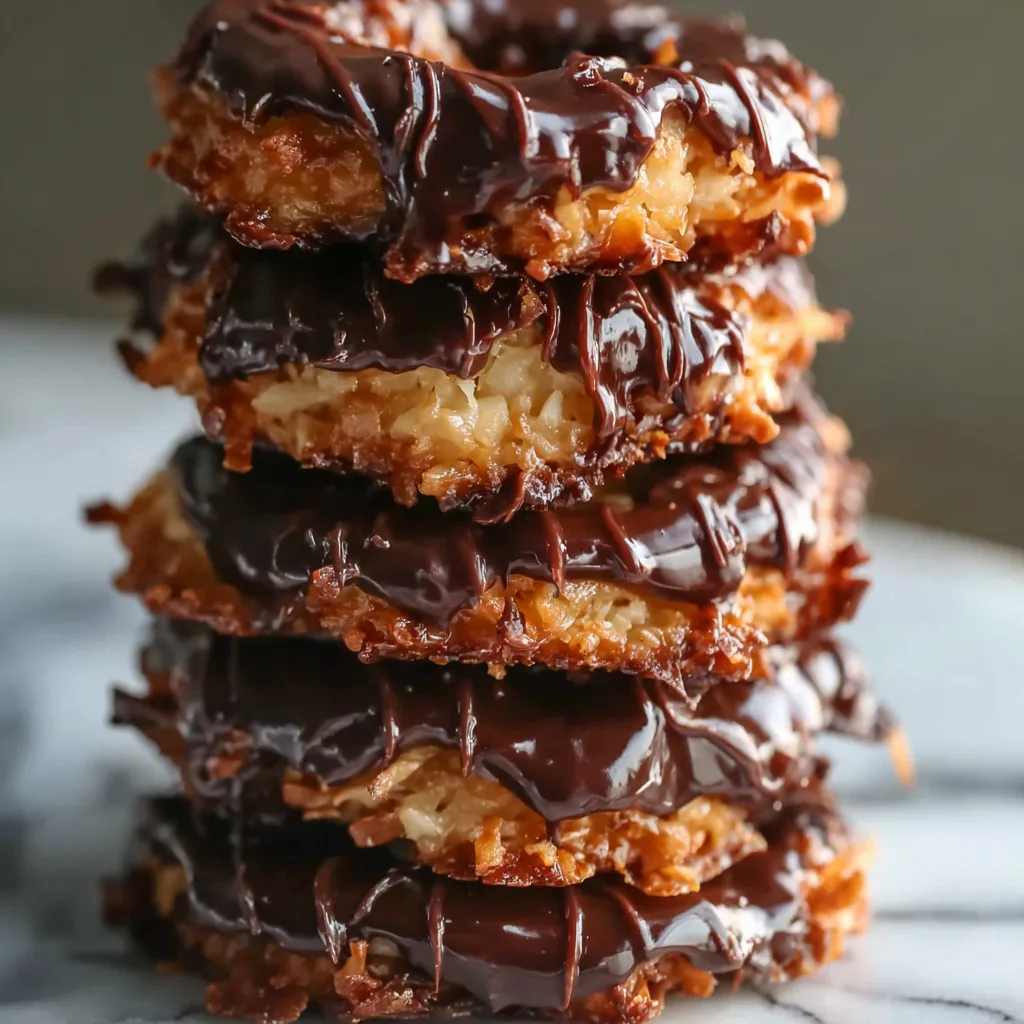
The beauty of making Samoa cookies at home lies in the control you have over every ingredient and the satisfaction of crafting these beloved treats from scratch. Unlike store-bought versions, your homemade Samoas can be customized to your taste preferences – extra caramel for those who love that gooey sweetness, additional toasted coconut for enhanced tropical flavor, or premium dark chocolate for a more sophisticated finish.
The Secret Behind Perfect Samoa Cookies
Creating the perfect Samoa cookie requires understanding the essential components that make these treats so irresistible. The foundation begins with a tender shortbread base that provides the perfect canvas for the layered toppings. This isn’t just any shortbread – it needs to be sturdy enough to support the weight of caramel and coconut while maintaining its delicate, buttery texture.
The caramel component is where many home bakers struggle, but mastering this element is crucial for authentic Samoa flavor. The key lies in achieving the right consistency – thick enough to coat the coconut generously without dripping off, yet smooth enough to spread evenly across the cookie surface. Temperature control during caramel preparation ensures you’ll achieve that perfect gooey texture that makes Samoa cookies so addictive.
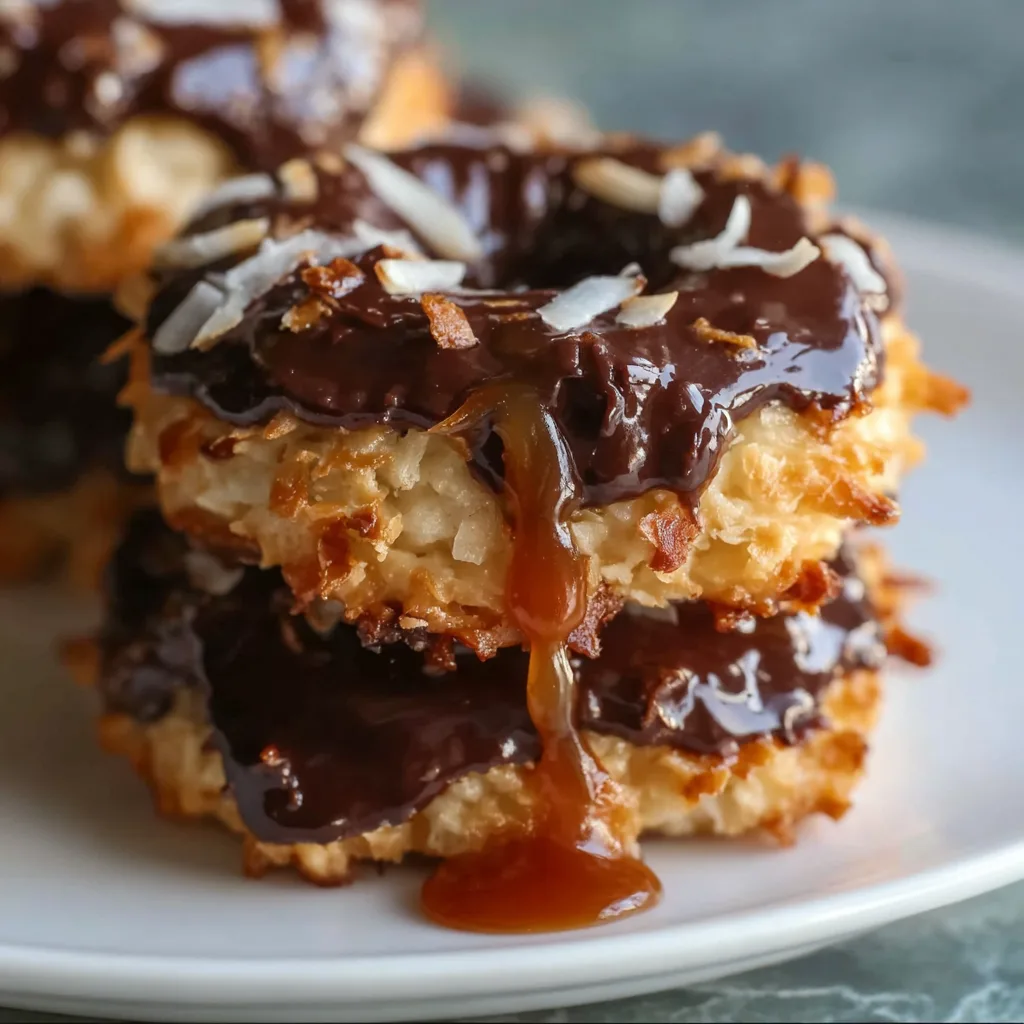
Toasted coconut adds both flavor and texture complexity to these cookies. The toasting process transforms bland coconut flakes into golden, nutty morsels that provide delightful contrast against the smooth caramel. Proper toasting technique ensures even browning and prevents burning, which can introduce bitter notes that compromise the overall flavor profile.
Essential Ingredients for Authentic Samoa Flavor
Quality ingredients make the difference between good homemade cookies and exceptional ones that surpass commercial varieties. For the shortbread base, use high-quality butter at room temperature, which creams beautifully with sugar and creates the tender texture that defines proper shortbread. Pure vanilla extract enhances the buttery flavor without overwhelming the delicate balance.
The caramel requires careful ingredient selection for optimal results. Heavy cream provides richness and helps achieve the perfect consistency, while corn syrup prevents crystallization and ensures smooth texture. Brown sugar adds depth and complexity compared to white sugar alone, creating those characteristic caramel notes that make Samoa cookies so distinctive.
Unsweetened shredded coconut works best for this recipe, allowing you to control sweetness levels while achieving proper texture. Sweetened coconut can make the final cookies overly sweet and may not toast as evenly. For the chocolate component, choose high-quality chocolate chips or chopped chocolate bars for superior melting properties and richer flavor.
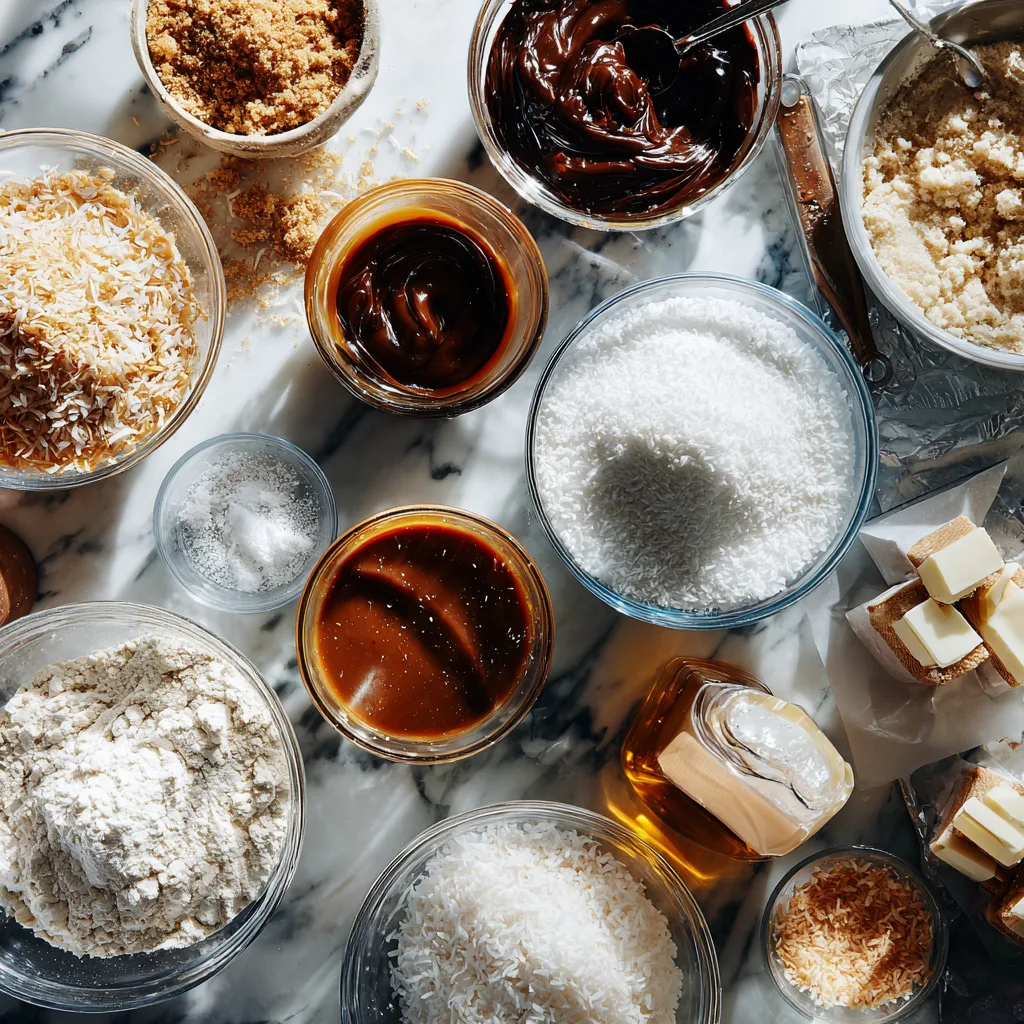
Ingredients
- 2 cups all-purpose flour
- 1/2 teaspoon salt
- 1 cup unsalted butter, softened
- 1/2 cup granulated sugar
- 2 tablespoons milk
- 1 teaspoon vanilla extract
- 3 cups shredded coconut
- 12 ounces caramels, unwrapped
- 1/4 cup heavy cream
- 8 ounces dark chocolate chips
- 2 tablespoons coconut oil
Instructions
- Preheat your oven to 350°F and line baking sheets with parchment paper for easy cookie removal.
- In a medium bowl, whisk together flour and salt, setting aside this dry mixture for later incorporation.
- Using an electric mixer, cream the softened butter with granulated sugar until light and fluffy, approximately 3-4 minutes.
- Add milk and vanilla extract to the butter mixture, mixing until completely incorporated and smooth.
- Gradually add the flour mixture to the wet ingredients, mixing just until a cohesive dough forms without overmixing.
- Roll the dough to 1/4-inch thickness on a floured surface and cut into 2-inch circles using a cookie cutter.
- Use a smaller 1-inch cutter to remove centers, creating ring shapes, then place on prepared baking sheets.
- Bake for 10-12 minutes until edges are lightly golden, then cool completely on wire racks.
- Spread coconut on a separate baking sheet and toast for 8-10 minutes, stirring frequently until golden brown.
- Melt caramels with heavy cream in a microwave-safe bowl, stirring every 30 seconds until smooth.
- Mix the toasted coconut into the melted caramel until evenly coated and well combined.
- Spread the coconut-caramel mixture generously on top of each cooled cookie ring.
- Melt chocolate chips with coconut oil using a double boiler or microwave until smooth and glossy.
- Drizzle or spread melted chocolate over the coconut-topped cookies, allowing some to drip down the sides.
- Let cookies set at room temperature for 30 minutes, or refrigerate for 15 minutes to speed the chocolate setting process.
Homemade Samoa Cookies
Ingredients
Equipment
Method
- Preheat oven to 350°F and line baking sheets with parchment paper.
- Whisk flour and salt in medium bowl, set aside.
- Cream butter and sugar until light and fluffy, 3-4 minutes.
- Add milk and vanilla to butter mixture, mix until smooth.
- Gradually add flour mixture, mixing just until dough forms.
- Roll dough to 1/4-inch thickness, cut into rings using cookie cutters.
- Bake 10-12 minutes until edges are lightly golden, cool completely.
- Toast coconut on baking sheet for 8-10 minutes until golden, stirring frequently.
- Melt caramels with cream, stirring until smooth. Mix in toasted coconut.
- Spread coconut-caramel mixture on top of each cookie ring.
- Melt chocolate with coconut oil until smooth and glossy.
- Drizzle chocolate over cookies, let set 30 minutes at room temperature.
Notes
Professional Tips for Samoa Success
Temperature control throughout the entire process significantly impacts your final results. Ensure your butter is properly softened – it should give slightly to pressure but not be melted or overly warm. Room temperature ingredients incorporate more easily and create smoother textures in both the shortbread base and caramel topping.
When working with caramel, patience is essential for achieving the perfect consistency. Rushing this process often results in grainy or overly thick caramel that doesn’t spread properly. If your caramel becomes too thick, add cream one teaspoon at a time until you reach the desired consistency. Conversely, if it’s too thin, continue heating briefly while stirring constantly.
Toasting coconut requires constant attention to prevent burning. Coconut can go from perfectly golden to burnt in mere seconds, so stir frequently and remove from heat as soon as it reaches your desired color. The coconut will continue cooking slightly from residual heat, so err on the side of lighter rather than darker.
Storage and Serving Suggestions
Proper storage ensures your homemade Samoa cookies maintain their texture and flavor for maximum enjoyment. Store completely cooled cookies in airtight containers at room temperature for up to one week. Layer cookies between parchment paper to prevent sticking and maintain their appearance.
For longer storage, these cookies freeze exceptionally well for up to three months. Wrap individual cookies in plastic wrap before placing in freezer-safe containers. Thaw at room temperature for best texture results. Avoid refrigerating these cookies, as the caramel can become too firm and the chocolate may develop condensation.
These cookies make excellent gifts when packaged in decorative tins or boxes. Their professional appearance and gourmet taste impression makes them perfect for holidays, special occasions, or anytime you want to share something truly special with friends and family.
Troubleshooting Common Samoa Cookie Issues
If your shortbread base turns out tough or dense, you likely overmixed the dough after adding flour. Mix just until ingredients are combined – the dough should come together without being overworked. Additionally, ensure your butter is properly softened but not melted, as this affects both texture and workability.
Caramel that won’t stick to coconut or cookies usually indicates temperature issues. The caramel should be warm enough to flow but not so hot that it melts the chocolate or makes the coconut soggy. Let caramel cool slightly after melting but work while still pliable for best adhesion.
Chocolate that appears dull or develops white spots typically results from temperature shock or moisture exposure. Melt chocolate gently and avoid getting any water in the mixture. Adding a small amount of coconut oil helps create glossy, smooth chocolate that sets with an attractive appearance.
Conclusion: Your New Favorite Cookie Recipe
Creating homemade Samoa cookies transforms your kitchen into a gourmet bakery, filling your home with irresistible aromas and providing endless satisfaction through the crafting process. These cookies offer superior flavor and texture compared to commercial versions while allowing complete control over ingredients and customization options.
The time invested in making these cookies pays dividends in both taste and the joy of sharing something truly special with others. Whether you’re satisfying your own Girl Scout cookie cravings or creating memorable gifts for loved ones, this recipe delivers consistent, professional-quality results that will have everyone asking for your secret.
Master this technique once, and you’ll have a go-to recipe that impresses every time. The combination of skills you’ll develop – from creating perfect shortbread to mastering caramel consistency – will enhance your overall baking abilities and confidence in the kitchen. Get ready to enjoy Samoa cookies whenever the craving strikes, made exactly to your preferences in your own home.