Arabic Chopped Salad (سلطة)
There is something beautifully simple about a bowl of freshly chopped Arabic salad. No complicated techniques. No heavy sauces. Just crisp vegetables, bright lemon, rich olive oil, and herbs that perfume the air the moment they hit the cutting board.
In many Middle Eastern homes, Arabic chopped salad — often simply called salata (سلطة) — isn’t just a side dish. It’s a daily essential. It sits beside grilled meats, wraps inside warm pita, balances rice dishes, and brings freshness to every meal it touches.
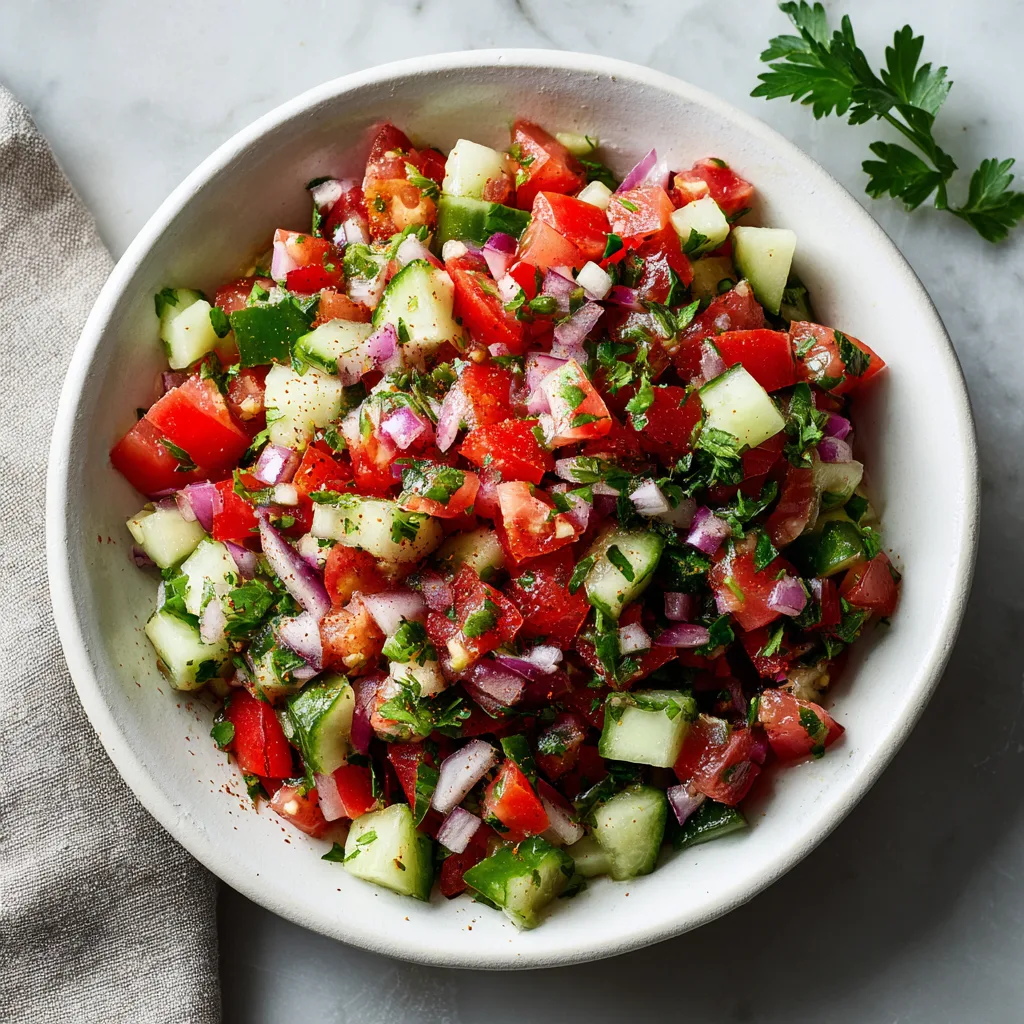
This Arabic chopped salad recipe is vibrant, refreshing, and incredibly easy to prepare. With finely diced cucumbers, juicy tomatoes, fragrant parsley, and a zesty lemon dressing, it captures the heart of Mediterranean cooking: fresh ingredients prepared simply and served generously.
If you’ve been searching for a healthy cucumber tomato salad that’s bursting with flavor and tradition, this is it.
What Makes Arabic Chopped Salad Special?
Unlike some Western-style salads with large leafy greens, Arabic salad is finely chopped. The vegetables are diced small and evenly so that each bite contains a little bit of everything.
This fine chop isn’t accidental — it’s intentional. It allows the lemon and olive oil dressing to coat every piece, creating balanced flavor in every spoonful.
While versions vary from country to country — Lebanese salata, Palestinian salad, Syrian salad — the core ingredients remain the same:
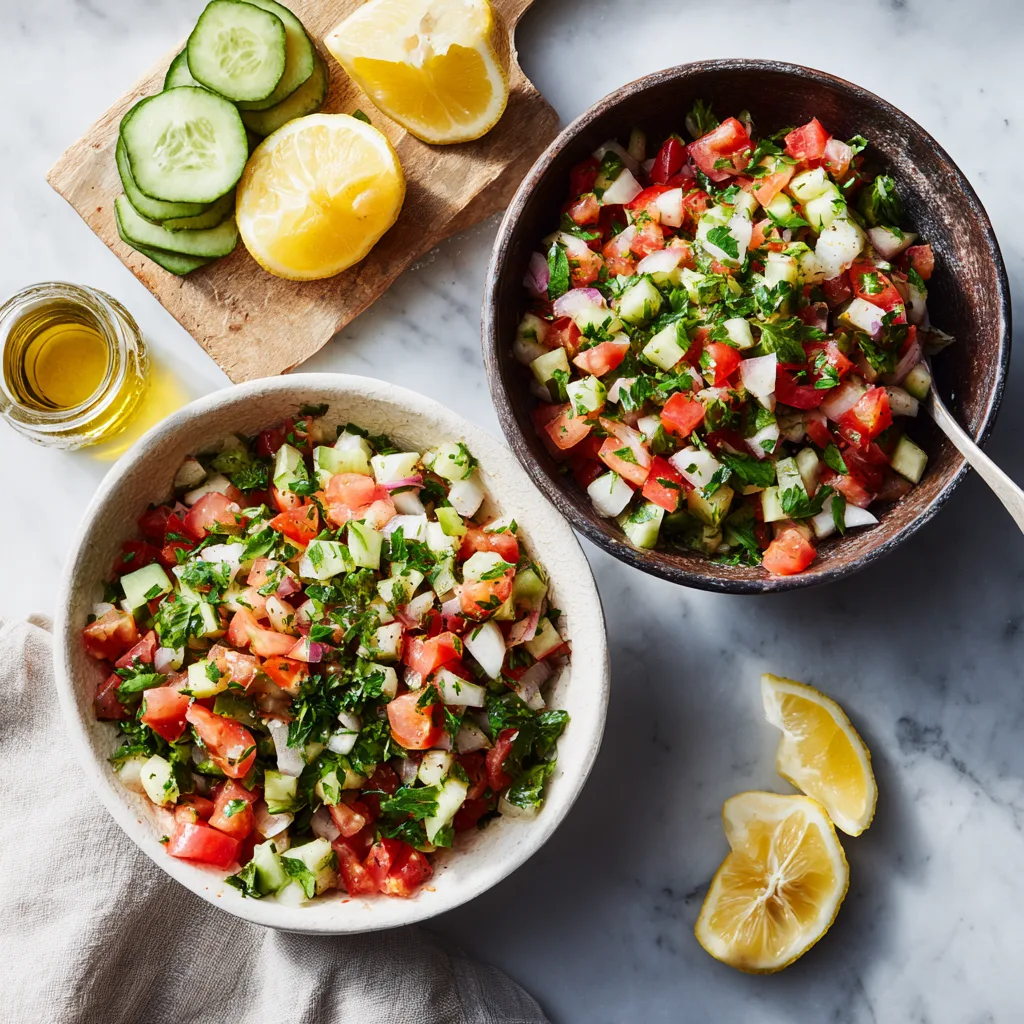
- Tomatoes
- Cucumbers
- Parsley
- Onion
- Lemon juice
- Olive oil
Some variations include mint, sumac, or even finely chopped bell pepper. But the soul of the dish is always freshness.
Ingredients
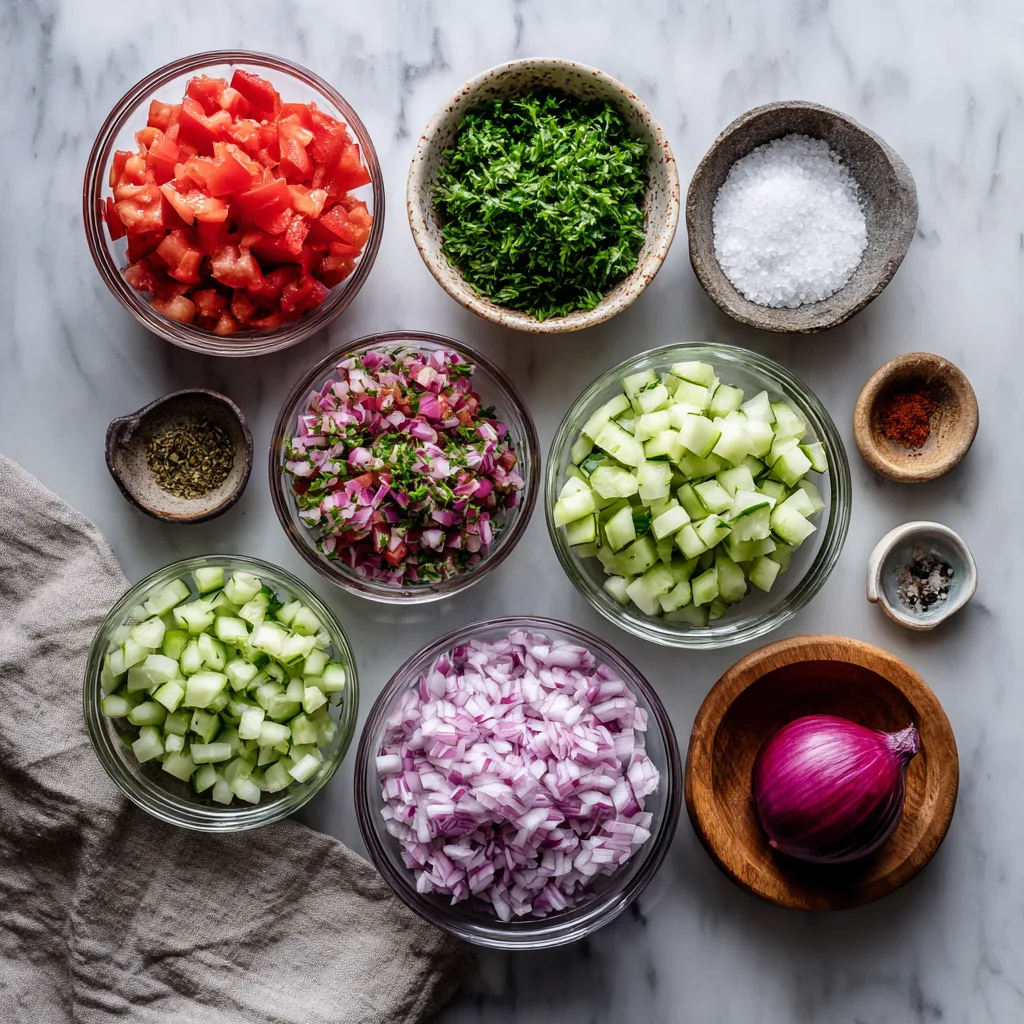
- 3 medium ripe tomatoes, finely diced
- 2 Persian cucumbers (or 1 large English cucumber), finely diced
- ¼ small red onion, very finely minced
- ½ cup fresh parsley, finely chopped
- 1 tablespoon fresh mint, finely chopped (optional)
- 2 tablespoons fresh lemon juice
- 2 tablespoons extra virgin olive oil
- ½ teaspoon salt (or to taste)
- ¼ teaspoon black pepper
- ¼ teaspoon sumac (optional but traditional in some regions)
Ingredient Tips for Authentic Flavor
Tomatoes
Use ripe, firm tomatoes. Roma tomatoes work well because they’re less watery, but any flavorful variety will do.
Cucumbers
Persian cucumbers are ideal because they are crisp and have fewer seeds. English cucumbers also work beautifully.
Parsley
Flat-leaf parsley is traditional. Chop it finely to distribute evenly.
Olive Oil
Choose a good-quality extra virgin olive oil. Its flavor truly shines in this simple dish.
Instructions
- Wash and dry all vegetables thoroughly.
- Finely dice the tomatoes into small, even cubes. If very juicy, remove some excess seeds to prevent the salad from becoming watery.
- Finely dice the cucumbers to match the size of the tomatoes.
- Mince the red onion very finely so it blends seamlessly into the salad.
- Chop the parsley (and mint, if using) until very fine but not mushy.
- In a large bowl, combine tomatoes, cucumbers, onion, parsley, and mint.
- In a small bowl, whisk together lemon juice, olive oil, salt, pepper, and sumac.
- Pour dressing over the vegetables and toss gently until evenly coated.
- Taste and adjust salt or lemon as needed.
- Serve immediately for maximum freshness.
Arabic Chopped Salad (سلطة)
Ingredients
Equipment
Method
- Finely dice tomatoes and cucumbers.
- Mince onion and chop parsley and mint.
- Combine vegetables in a bowl.
- Whisk dressing ingredients together.
- Pour dressing over salad and toss gently before serving.
Notes
The Art of Fine Chopping
The beauty of this Middle Eastern salad recipe lies in uniform chopping. Aim for small, even pieces — about ¼-inch dice. This ensures texture harmony and better flavor distribution.
Take your time with the knife work. It transforms a simple bowl of vegetables into something extraordinary.
Serving Suggestions
Arabic chopped salad is incredibly versatile.
Serve it alongside:
- Grilled chicken or lamb
- Shawarma wraps
- Falafel
- Rice pilaf
- Grilled fish
- Stuffed grape leaves
It’s also delicious tucked inside warm pita bread or spooned over hummus.
For a modern twist, try serving it over quinoa or bulgur for a heartier meal.
Cultural Context
Across Lebanon, Palestine, Jordan, and Syria, this salad appears at nearly every table. It’s common at family gatherings, Ramadan iftars, weddings, and everyday lunches.
In many homes, it’s prepared fresh daily — sometimes more than once a day. Because it requires no cooking, it’s quick to assemble and complements nearly any main dish.
The simplicity reflects the Mediterranean philosophy of letting ingredients speak for themselves.
Make-Ahead & Storage
Arabic chopped salad is best enjoyed fresh. However:
- You can chop vegetables a few hours in advance and store separately.
- Add dressing just before serving.
If already dressed, consume within 24 hours for best texture. The salt and lemon will gradually soften the vegetables.
Flavor Variations
Add Crunch
Stir in finely chopped bell peppers for extra texture.
Add Heat
Include a finely minced green chili for subtle spice.
Add Protein
Top with crumbled feta cheese for a Mediterranean fusion twist.
Turn It Into Fattoush
Add toasted pita chips and a sprinkle of extra sumac.
Health Benefits
This healthy cucumber tomato salad is:
- Naturally vegan
- Gluten-free
- Low calorie
- High in fiber
- Rich in vitamin C
- Packed with antioxidants
The olive oil provides heart-healthy fats, while fresh herbs offer anti-inflammatory properties.
It’s proof that healthy food can be vibrant and satisfying.
Common Questions
Why is my salad watery?
Tomatoes naturally release juice when salted. To minimize excess liquid:
- Remove tomato seeds.
- Add salt just before serving.
Can I use dried herbs?
Fresh herbs are essential for authentic flavor. Dried herbs won’t provide the same brightness.
What if I don’t have sumac?
Simply omit it. Sumac adds tangy depth but isn’t mandatory.
Why You’ll Keep Coming Back to This Recipe
Arabic chopped salad is more than a side dish — it’s a celebration of freshness. It’s colorful, crisp, bright, and deeply satisfying in its simplicity.
In a world of complicated recipes, this one reminds us that sometimes the best dishes are the simplest.
One bowl. A sharp knife. A squeeze of lemon.
That’s all it takes.