Avocado Shrimp Ceviche: A Fresh, Flavor-Packed Classic With a Creamy Twist
Few dishes capture the essence of freshness quite like Avocado Shrimp Ceviche. Bright citrus, crisp vegetables, tender shrimp, and creamy avocado come together in a bowl that’s equal parts refreshing and deeply satisfying. Whether you’re preparing a summertime appetizer, a light dinner, or the star dish for a gathering, this ceviche delivers flavor, texture, and beauty with irresistible simplicity.
Ceviche has long been a treasured staple across Latin America, especially in coastal regions where seafood is abundant. While versions vary from country to country, the heart of ceviche remains consistent: fresh seafood transformed by the natural acidity of citrus juice. This chemical reaction — similar to cooking but without heat — turns raw fish or shrimp firm, opaque, and flavorful.

Avocado Shrimp Ceviche takes the beloved classic and adds a creamy, cooling component that balances the brightness of lime and the subtle heat from jalapeño. It’s a dish that feels luxurious while requiring minimal effort, making it perfect for both novice cooks and seasoned home chefs looking for something quick yet impressive.
In this comprehensive guide, you’ll find everything you need to master Avocado Shrimp Ceviche: detailed steps, ingredient explanations, tips, variations, and serving suggestions. Let’s dive into the bowl of freshness you’re about to create.
Why This Avocado Shrimp Ceviche Works So Well
This recipe is built on balance — a harmony of flavors and textures that elevate simple ingredients:
• Citrus brightness: Fresh lime and lemon juice form the backbone of the marinade, “cooking” the shrimp while infusing aromatic acidity.
• Crunch and freshness: Red onion, tomato, cilantro, and jalapeño provide layers of crisp, lively flavor.
• Creaminess: Avocado introduces a buttery richness that mellows the acidity and ties every bite together.
• Natural sweetness: The shrimp offers a gentle sweetness enhanced by citrus, particularly when chilled properly.
• Simple ingredients, big payoff: With just a few pantry and fresh ingredients, you get a dish that feels gourmet.
Whether you prefer your ceviche mild or fiery, chunkier or finely diced, traditional or modern — you can customize this recipe endlessly.
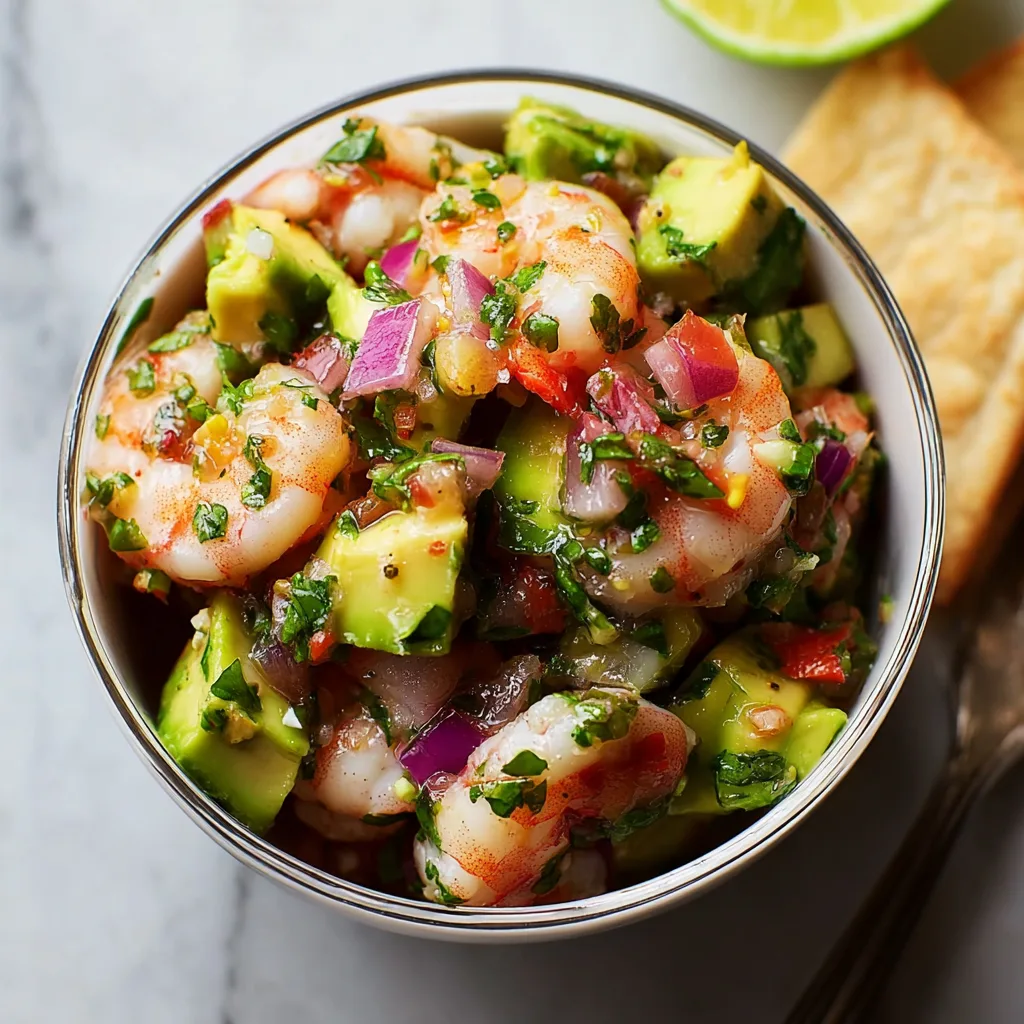
Ingredients for Avocado Shrimp Ceviche
(Your format uses dashes, so here you go.)
For the Ceviche
- 1 pound raw shrimp, peeled, deveined, and chopped into bite-sized pieces
- 1 cup freshly squeezed lime juice
- 1/2 cup freshly squeezed lemon juice
- 1 medium red onion, finely diced
- 1–2 roma tomatoes, diced
- 1 jalapeño, seeded and finely minced (more for extra heat)
- 1 garlic clove, minced
- 1/2 cup chopped fresh cilantro
- 1 teaspoon salt (adjust to taste)
- 1/2 teaspoon black pepper
- 1 large avocado, diced
- Optional: 1 tablespoon olive oil for added richness
Instructions
1. Marinate the Shrimp
Pour lime and lemon juice into a medium glass bowl. Add the chopped raw shrimp and stir well to ensure every piece is coated. Cover the bowl and refrigerate for 20–30 minutes, or until the shrimp turns opaque and firm. This indicates it has “cooked” in the citrus.
2. Prepare the Vegetables
While the shrimp marinates, dice your tomatoes, onion, jalapeño, and cilantro. Mince the garlic and set everything aside.
3. Combine All Ingredients
Once the shrimp is ready, drain off about half of the citrus juice to prevent the ceviche from becoming too soupy. Add the tomatoes, onion, jalapeño, garlic, and cilantro. Stir to combine.
4. Season the Ceviche
Sprinkle salt, pepper, and (optional) olive oil. Mix again until fully incorporated.
5. Add the Avocado
Dice the avocado just before serving and gently fold it into the ceviche, doing your best not to mash it.
6. Chill (Optional)
For best flavor, refrigerate for an extra 10–15 minutes to allow flavors to deepen and harmonize.
7. Serve
Enjoy with tortilla chips, tostadas, plantain chips, or spooned into small cups for party-style servings.
Avocado Shrimp Ceviche
Ingredients
Equipment
Method
- Combine lime and lemon juice in a bowl. Add chopped raw shrimp, ensuring it is fully submerged. Refrigerate 20–30 minutes or until opaque.
- Prepare tomatoes, onion, cilantro, garlic, and jalapeño while shrimp marinates.
- Drain half of the citrus juice from the shrimp. Add vegetables and gently mix.
- Season with salt and pepper. Adjust to taste.
- Fold in diced avocado just before serving.
- Chill 10–15 minutes for deeper flavor, then serve chilled.
Notes
Tips for Perfect Avocado Shrimp Ceviche
1. Use fresh citrus — always.
Bottled juice is convenient but lacks vibrancy and can taste metallic.
2. Don’t over-marinate.
Leaving shrimp in citrus too long makes it rubbery. Remove or reduce citrus once “cooked.”
3. Add avocado last.
Avocado softens quickly. Fold it in just before serving to maintain the creamy cubes.
4. Chill before serving.
Cold ceviche tastes fresher and more balanced.
5. Choose the right shrimp size.
Medium (41–50 count) or large (31–40 count) shrimp work best.
Flavor Variations
• Spicy Mango Shrimp Ceviche
Add diced mango for sweetness and extra jalapeño or serrano for heat.
• Coconut-Lime Shrimp Ceviche
Mix in 2–3 tablespoons of coconut milk for a tropical twist.
• Baja-Style Ceviche
Add cucumber for crispness and a splash of orange juice.
• Completely Raw Ceviche
Confirmed Sushi-grade shrimp? Skip par-cooking entirely and rely solely on citrus.
Serving Suggestions
Avocado Shrimp Ceviche is versatile — try serving it:
• In small appetizer cups for parties
• With crispy tortilla chips as a dip
• As a topping for tostadas with shredded cabbage
• In lettuce cups for a low-carb option
• With chilled beer, margaritas, or sparkling water
Fun Facts & Cultural Context
• Ceviche dates back over 2000 years, originating from coastal Peru regions before spreading across Latin America.
• Mexico popularized shrimp ceviche, showcasing its abundance of coastal seafood.
• Citrus-marinated seafood isn’t “raw” — the acid denatures protein, changing color, texture, and firmness.
• Variations of ceviche appear worldwide, from the Philippines’ “kinilaw” to Polynesian coconut-marinated fish.