Easy Greek Salad: Fresh, Simple, and Timeless
When it comes to salads that never go out of style, easy Greek salad stands at the top. Fresh, colorful, and packed with bold Mediterranean flavors, this classic dish proves that simplicity is often the key to greatness. With just a handful of ingredients and minimal preparation, Greek salad delivers crisp textures, bright acidity, and rich, savory notes in every bite.
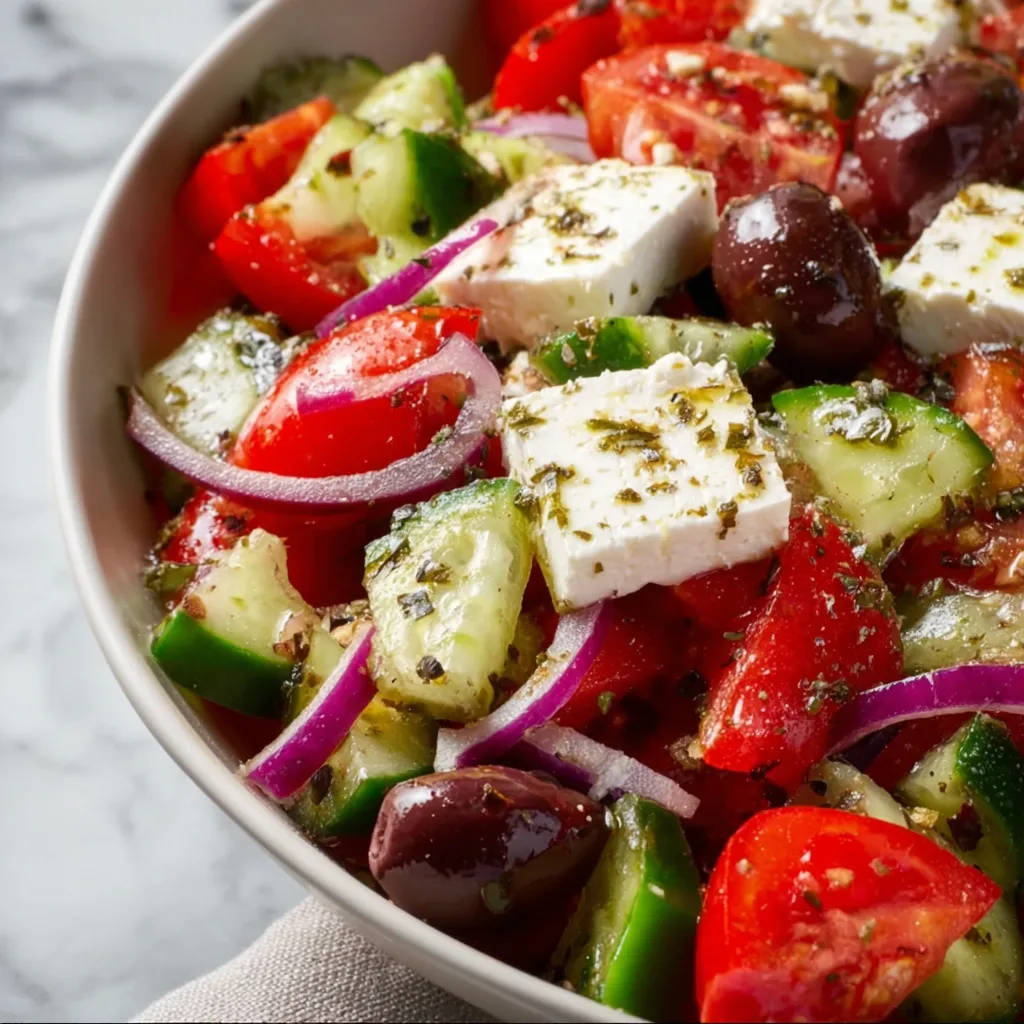
This is not a leafy salad weighed down with heavy dressings. Instead, Greek salad celebrates vegetables in their purest form—juicy tomatoes, crunchy cucumber, sharp red onion, briny olives, and creamy feta—brought together with good olive oil and a touch of oregano. It’s refreshing, satisfying, and endlessly versatile.
Why Greek Salad Is a Staple Around the World
Greek salad has endured for generations because it relies on quality ingredients rather than complicated techniques. It’s naturally gluten-free, vegetarian, and fits effortlessly into many eating styles. Whether served as a side dish or enjoyed as a light meal, it always feels appropriate.
People love Greek salad because:
- It’s quick and easy to prepare
- Ingredients are fresh and accessible
- Flavors are bold yet balanced
- It pairs well with countless main dishes
- It feels light but still satisfying
This salad doesn’t need embellishment—its beauty lies in restraint.
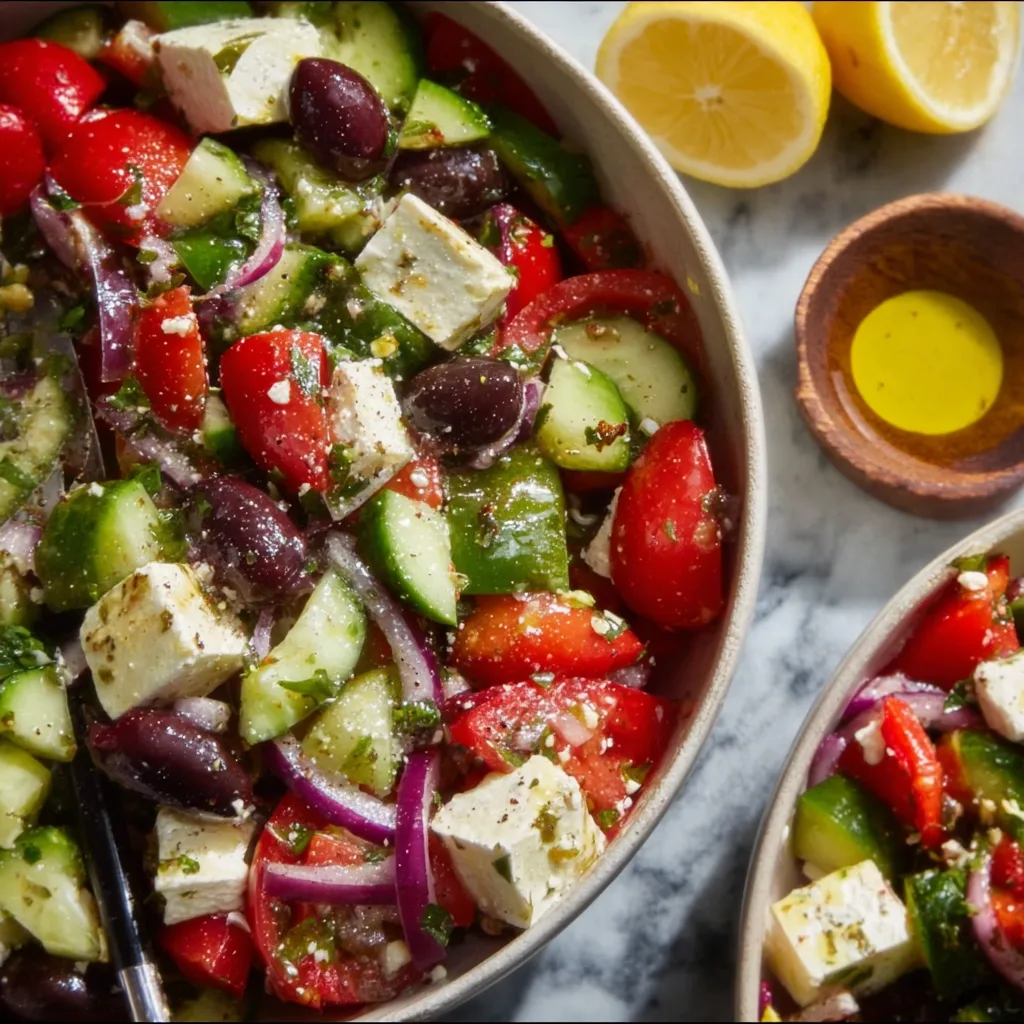
What Makes a Greek Salad Authentic
An authentic Greek salad focuses on large-cut vegetables, not finely chopped pieces. The dressing is minimal, relying on olive oil, vinegar, and oregano rather than creamy emulsions. Feta is traditionally served in slabs or large chunks instead of being crumbled, allowing its salty creaminess to stand out.
There’s no lettuce, no sugar, and no heavy dressing—just clean, honest flavors.
Ingredients for Easy Greek Salad
- Ripe tomatoes
- Cucumber
- Red onion
- Kalamata olives
- Feta cheese
- Extra virgin olive oil
- Red wine vinegar
- Dried oregano
- Salt
- Black pepper
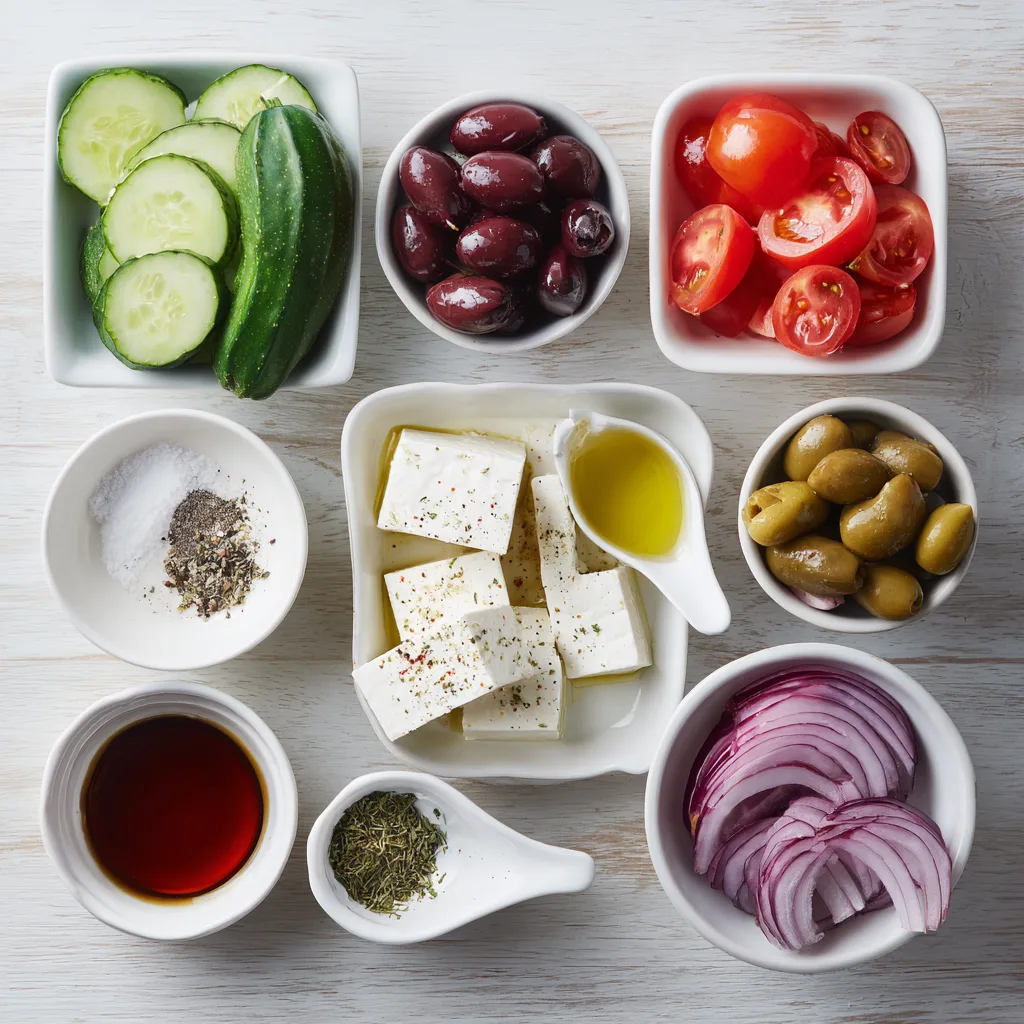
Each ingredient plays an essential role. Tomatoes bring sweetness and acidity, cucumbers add crunch, olives provide depth, and feta ties everything together with creamy saltiness.
Instructions
- Cut tomatoes into large wedges and place in a serving bowl.
- Slice cucumber into thick half-moons and add to the bowl.
- Thinly slice red onion and scatter over the vegetables.
- Add Kalamata olives evenly throughout the salad.
- Drizzle generously with olive oil and red wine vinegar.
- Sprinkle with dried oregano, salt, and black pepper.
- Top with large pieces or slabs of feta cheese.
- Toss gently just before serving, or leave feta on top for presentation.
Easy Greek Salad
Ingredients
Equipment
Method
- Add tomatoes, cucumber, red onion, and olives to a large bowl.
- Drizzle with olive oil and red wine vinegar.
- Season with oregano, salt, and black pepper.
- Top with feta cheese and gently toss or leave layered.
- Serve immediately or after resting briefly.
Notes
Texture and Flavor Balance
Greek salad works because every bite is different. Juicy tomatoes burst with freshness, cucumbers stay crisp, olives deliver briny richness, and feta adds creamy contrast. Olive oil smooths everything out, while vinegar and oregano keep flavors sharp and aromatic.
It’s refreshing without being bland and bold without being heavy.
Tips for the Best Greek Salad
- Use ripe, in-season tomatoes for best flavor
- Cut vegetables into large pieces, not small dice
- Don’t overdress—olive oil should coat, not drown
- Add feta just before serving
- Let salad rest briefly to meld flavors
Variations and Add-Ins
While the classic version is perfect as-is, Greek salad adapts easily:
- Add bell peppers for sweetness
- Include capers for extra brine
- Use lemon juice instead of vinegar
- Add grilled chicken or shrimp for a meal salad
- Finish with fresh herbs like parsley
Serving Suggestions
Easy Greek salad pairs beautifully with:
- Grilled meats or seafood
- Roasted chicken
- Flatbreads or pita
- Rice dishes or grain bowls
It’s equally at home at casual lunches or elegant dinners.
Storage Tips
Greek salad is best fresh, but leftovers can be stored in the refrigerator for up to 24 hours. Store feta separately if possible to maintain texture.
Why Greek Salad Fits So Many Diets
Naturally vegetarian and gluten-free, Greek salad suits a wide range of lifestyles. It’s nutrient-rich, refreshing, and doesn’t rely on processed ingredients.
Mediterranean Food Philosophy
Greek salad reflects the heart of Mediterranean cooking: respect for ingredients, balance, and simplicity. It’s food meant to nourish, not overwhelm.
Final Thoughts
If you’re looking for a dish that’s fresh, effortless, and universally loved, easy Greek salad is always the right choice. It’s proof that a few high-quality ingredients can create something truly memorable.