The Best Scrambled Eggs
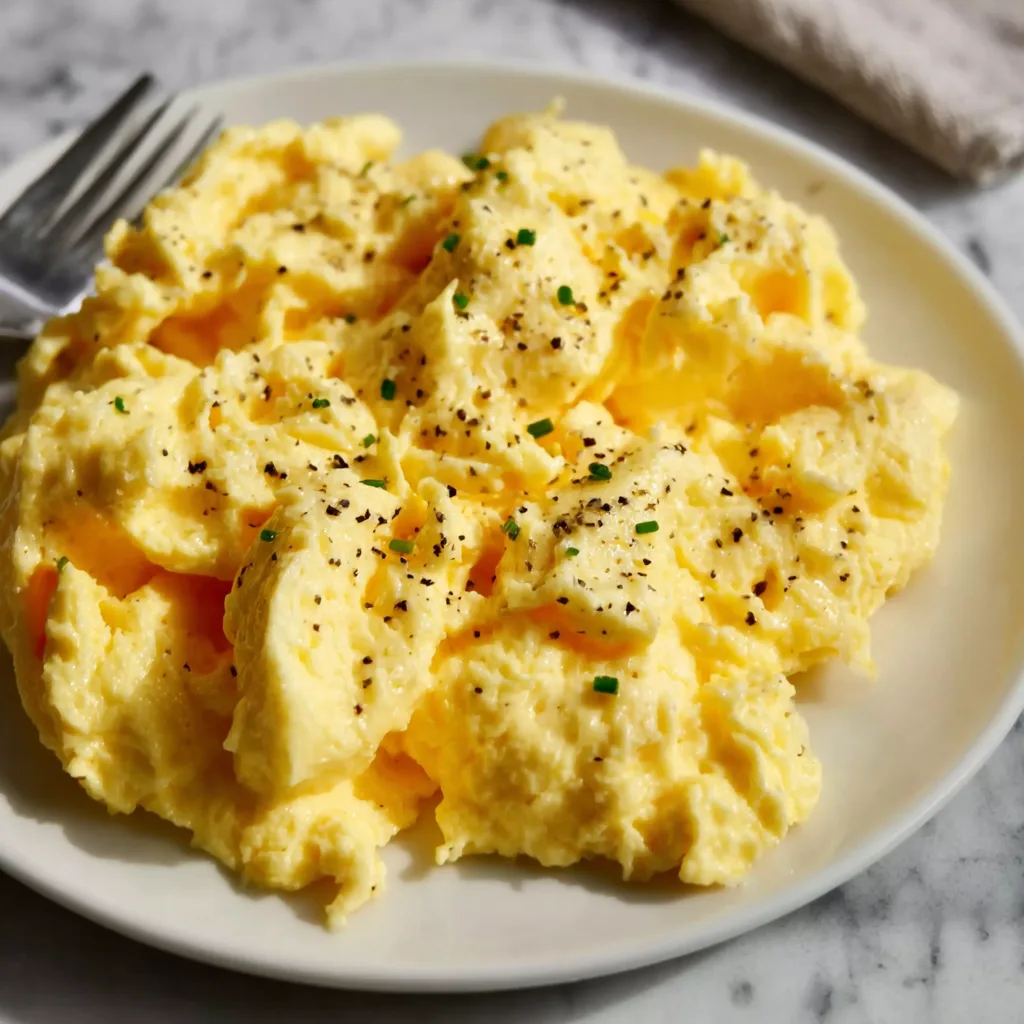
Scrambled eggs seem simple, but truly great scrambled eggs—the kind that are soft, creamy, custardy, buttery, and unbelievably fluffy—require just a little technique. When made correctly, scrambled eggs transform from an everyday breakfast into something luxurious, comforting, and absolutely irresistible.
This recipe teaches you exactly how to achieve perfect scrambled eggs every single time. Whether you prefer them super soft and custardy or a little firmer and fluffy, this guide breaks down every step in detail. These eggs cook low and slow, forming delicate curds that melt in your mouth and taste incredible without needing many ingredients.
Great scrambled eggs are not about fancy additions—they’re about method. And once you master the fundamentals, you’ll never go back to dry, rubbery eggs again.
Why These Eggs Are Truly “The Best”
✔ Extra creamy & soft without being runny
✔ Buttery, rich flavor
✔ Fluffy curds that melt in your mouth
✔ No browning or overcooking
✔ Ready in minutes
✔ Works with milk, cream, or no dairy at all
These eggs shine on their own, but they also pair perfectly with toast, fruit, bacon, or breakfast potatoes. They’re breakfast perfection.
What Makes Scrambled Eggs Creamy?
The key to ultra-creamy scrambled eggs comes down to:
1. Low Heat
Cooking over low heat prevents browning and gives you soft, tender curds.
2. Continuous Movement
Stirring keeps curds small and silky.
3. Butter
Adds richness and smoothness.
4. Dairy (Optional)
Cream or milk softens the texture further, though the recipe works perfectly without it.
5. Remove from Heat Early
Eggs keep cooking from residual heat—turn off the heat just before they look done.

Ingredient Breakdown
Eggs
Use large, fresh eggs for best flavor.
Butter
Butter adds creamy richness and prevents sticking.
Milk or Cream (Optional)
A little splash can make eggs fluffier and softer, but you can skip it for classic scrambled eggs.
Salt + Pepper
The basics—simple seasoning is all scrambled eggs need.
Chives (Optional)
Fresh chives add brightness and color.
How to Make the Best Scrambled Eggs
Step 1: Whisk the Eggs Well
Crack eggs into a bowl and whisk vigorously until the mixture is completely uniform. More whisking = fluffier eggs.
Step 2: Season the Eggs
Add salt now so it dissolves into the eggs and creates creamier curds.
Step 3: Heat the Pan on Low
Add butter to a nonstick skillet over low heat. Let it melt slowly without browning.
Step 4: Add Eggs to the Pan
Pour in the eggs and let them sit for 1–2 seconds until they just begin to set.
Step 5: Stir Constantly
Use a silicone spatula to push the eggs from the edges toward the center. Keep the heat low and move the eggs continuously for small, delicate curds.
Step 6: Remove Early
When eggs look about 90% cooked, remove from heat. Residual heat finishes the job.
Step 7: Add Pepper and Optional Chives
Top with freshly cracked pepper and herbs.
Step 8: Serve Immediately
Scrambled eggs are best the moment they’re cooked—light, soft, silky, and warm.
Ingredients
- 6 large eggs
- 2 tbsp butter
- 1–2 tbsp cream or milk (optional)
- ¼ tsp salt
- Black pepper, to taste
- Fresh chives (optional)

Instructions
- Crack eggs into a bowl and whisk until smooth and streak-free.
- Add salt and optional cream; whisk again.
- Melt butter over low heat in a nonstick skillet.
- Pour in eggs and let sit for 2 seconds.
- Stir continuously with a spatula, scraping from edges to center.
- When eggs are still glossy and slightly undercooked, remove from heat.
- Season with pepper and sprinkle with chives.
- Serve immediately.
The Best Scrambled Eggs
Ingredients
Equipment
Method
- Whisk eggs until completely smooth and uniform.
- Add salt and optional cream; whisk again.
- Melt butter in a nonstick skillet over low heat.
- Pour in the eggs and stir gently and continuously.
- Remove from heat when the eggs look slightly underdone.
- Season with pepper and sprinkle with chives. Serve warm.
Notes
Tips for Perfect Scrambled Eggs
1. Whisk longer than you think
Air = fluffiness.
2. Don’t turn up the heat
High heat = dry, rubbery eggs.
3. Use a silicone spatula
It moves gently and won’t break up curds too much.
4. Cook low and slow
This is how you get that custard-like texture.
5. Don’t overcook
Eggs go from soft to dry in seconds—remove early.
Variations
Cheesy Scrambled Eggs
Add shredded cheddar, gouda, goat cheese, or feta near the end.
Soft French-Style Scrambled Eggs
Cook extremely low and stir constantly for a silky custard style.
Fluffy Diner-Style Scrambled Eggs
Add 2 tbsp milk and cook slightly higher for bigger curds.
Veggie Scramble
Add sautéed spinach, mushrooms, peppers, or tomatoes.
Herb Scramble
Add chives, parsley, dill, or basil.
Serving Suggestions
Serve with:
- Avocado toast
- Hash browns
- Bacon
- Fresh fruit
- Breakfast sausage
- Bagels or croissants
Also amazing in breakfast burritos or sandwiches.
Storage & Reheating
Scrambled eggs are best eaten fresh, but if needed:
Refrigerate: 2 days
Reheat: Low and slow in a nonstick pan with a pat of butter
Avoid microwaving: It can make them rubbery